

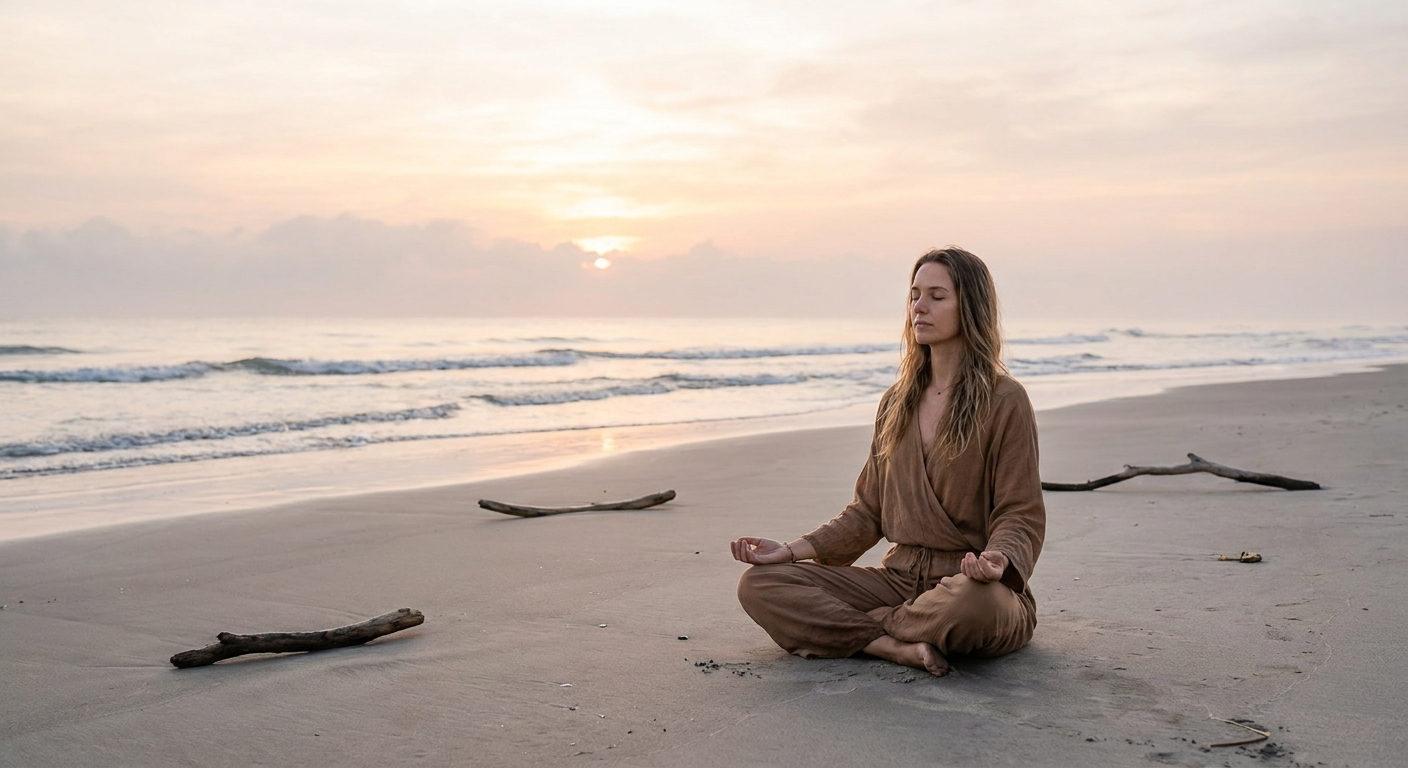
Yoga and Meditation for Beginners: Start Your Wellness Journey Today
What Are Yoga and Meditation for Beginners?
Yoga and meditation for beginners is the practice of connecting your body and mind through simple, accessible techniques. It does not require flexibility, silence, or hours of free time. Instead, it is a foundational wellness practice that combines gentle physical postures with focused breathing to reduce stress and increase present-moment awareness.
This practice involves learning basic poses, breathwork, and mindfulness exercises. The goal is to build a sustainable routine that improves your physical and mental well-being, one breath at a time.
Main Characteristics of a Beginner’s Practice
- Accessibility: Poses and meditations are simple and can be modified for any body type.
- Low time commitment: Sessions can be effective in as little as 5–10 minutes per day.
- Focus on fundamentals: You learn core techniques before advancing to more complex practices.
- Stress reduction: The primary benefit is activating the body’s relaxation response.
How Does a Beginner Yoga and Meditation Practice Work?
- Step 1: Center Yourself. Begin with a few minutes of deep breathing to signal to your nervous system that it’s time to slow down.
- Step 2: Move Gently. Perform simple yoga poses to release physical tension and improve body awareness.
- Step 3: Sit in Stillness. Transition into a short meditation to observe your thoughts and cultivate mental clarity.
Why Are Yoga and Meditation Important for Your Well-Being?
Modern life keeps your nervous system in a constant state of low-grade stress. Studies show that chronic stress affects over 75% of adults globally, leading to poor sleep, low energy, and emotional exhaustion. This is where a mindfulness for beginners practice becomes not just a luxury, but a necessity for resilience.
Yoga and meditation work together like two sides of the same coin. Yoga prepares your body to sit still, while meditation trains your mind to find stillness. When practiced together, they lower cortisol levels, improve heart rate variability, and rewire the brain for greater emotional resilience. The best part? You do not need any prior experience to begin.
How to Start Your Yoga and Meditation Practice
Choosing the Right Yoga Style
Not all yoga styles are created equal. For beginners, we recommend starting with Hatha or Vinyasa Flow. Both are gentle, accessible, and widely available on platforms like Vitalizen App. These styles focus on foundational poses and breath coordination, making them ideal for building confidence.
Essential Beginner Yoga Poses
Here are five foundational poses that every beginner should learn. Practice each one for 30 seconds to one minute, and remember to breathe deeply throughout.
- Mountain Pose (Tadasana): Stand tall with feet hip-width apart, arms at your sides. Ground through your feet and lengthen your spine. This pose improves posture and body awareness.
- Downward-Facing Dog (Adho Mukha Svanasana): Start on all fours, then lift your hips toward the ceiling, forming an inverted V shape. This pose stretches the entire back body and calms the mind.
- Child’s Pose (Balasana): Kneel on the floor, sit back on your heels, and fold forward with arms extended or resting by your sides. This is a resting pose that releases tension in the back and neck.
- Cat-Cow Stretch (Marjaryasana-Bitilasana): On all fours, alternate between arching your back (cow) and rounding it (cat). This gentle spinal movement warms up the back and improves flexibility.
- Corpse Pose (Savasana): Lie flat on your back, arms at your sides, palms facing up. Close your eyes and relax completely. This is the most important pose—it allows your body to integrate the practice.
These beginner yoga poses are safe, effective, and can be done in under 10 minutes. For guided video sessions, explore the Vitalizen App library, where each class is designed with beginners in mind.
Creating a Simple Yoga Routine
Consistency matters more than duration. Start with 10 minutes per day, three to four times per week. Morning practice energizes your day, while evening practice helps you unwind. Use the Vitalizen App to set reminders and track your progress—small habits lead to big transformations.
Step-by-Step Meditation for Beginners
If your mind feels like a browser with 50 tabs open, you are not alone. Meditation for beginners is about learning to observe your thoughts without judgment, not about emptying your mind. Here is a simple method to begin today.
5-Minute Breath Awareness Meditation: Find a comfortable seated position. Close your eyes. Bring your attention to your natural breath—notice the sensation of air entering and leaving your nostrils. When your mind wanders (and it will), gently bring it back to the breath. Do this for five minutes. That is it. You have just meditated. This technique, known as mindfulness meditation, is the foundation of most modern meditation practices.
Research from Harvard University shows that just eight weeks of daily mindfulness practice can increase gray matter density in brain regions associated with memory, empathy, and stress regulation. Read the study.
Common Meditation Myths for Beginners
- “I cannot stop thinking.” You are not supposed to. Meditation is about noticing thoughts, not eliminating them.
- “I do not have time.” Even one minute of conscious breathing counts. Quality matters more than quantity.
- “I need a special cushion or space.” All you need is a chair, a floor, or a park bench. Your breath is your anchor.
Why Use Guided Meditation for Faster Progress?
For many beginners, guided sessions are the easiest way to build a consistent practice. The Vitalizen App offers a growing library of guided meditation sessions ranging from 3 to 30 minutes, covering topics like stress relief, better sleep, focus, and self-compassion. Each session is narrated with a calm voice and gentle background sounds, making it feel like a personal coach is right there with you.
Combining Yoga and Meditation for Maximum Benefit
When you combine movement with stillness, the results are synergistic. A typical yoga and meditation session might look like this:
- 5 minutes of gentle yoga to warm up the body
- 5 minutes of breathwork to center the mind
- 5 minutes of seated meditation for deep stillness
This balanced approach ensures that you are not only flexible in body but also resilient in mind. Over time, this combination can transform your overall well-being.