

Yoga and Meditation: Benefits, Tips, and How to Start
Discover the science-backed benefits of yoga and meditation: less stress, more flexibility, better sleep, and greater mental clarity. Learn simple ways to build a lasting practice.
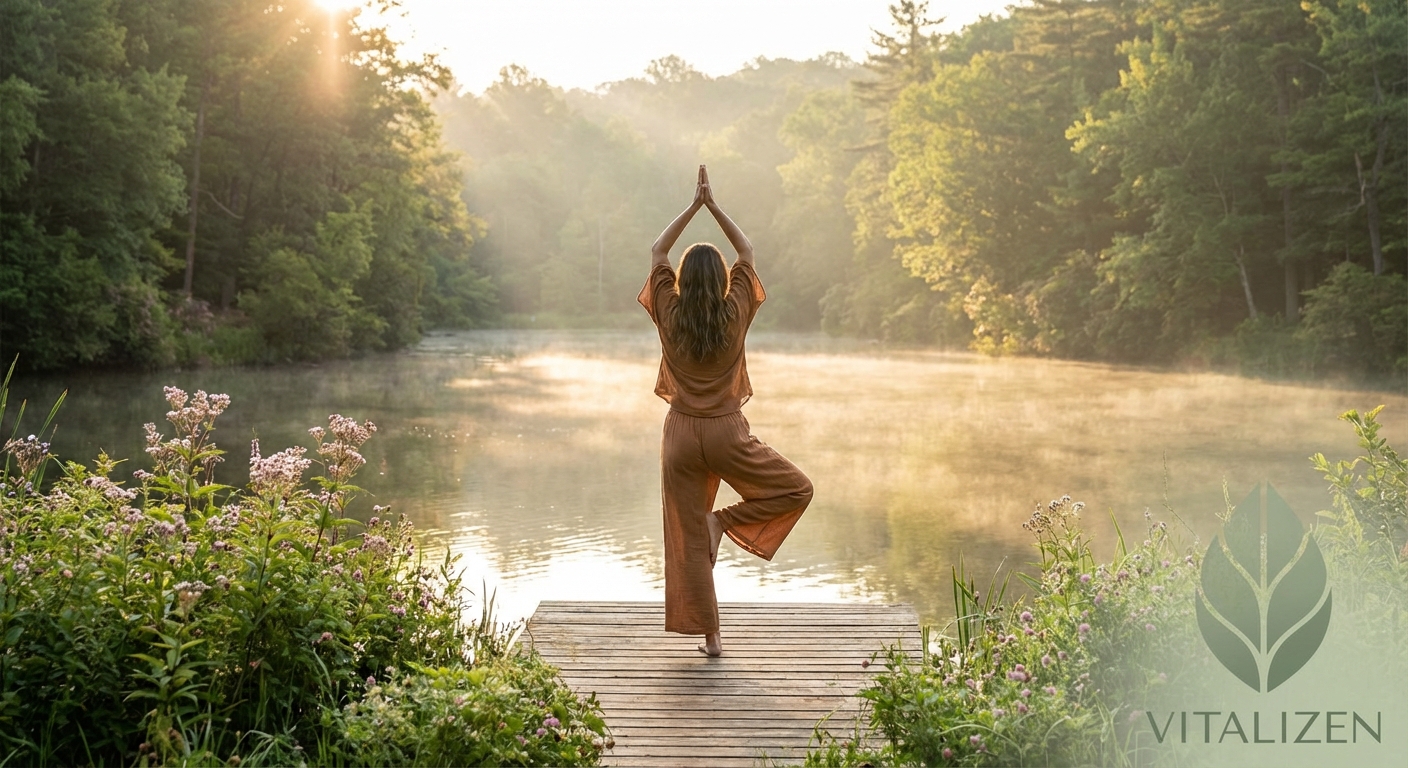
Have you ever felt that your mind is racing in a thousand directions while your body feels completely exhausted? You are not alone. In today’s fast-paced world, finding balance between mental clarity and physical health is harder than ever. The good news? Yoga and meditation offer a powerful, science-backed solution that has helped millions of people reclaim their well-being.
In this article, you’ll learn what yoga and meditation really are, how they benefit your mind and body, and the simplest ways to begin a practice that fits your lifestyle. You’ll also see how Vitalizen App | Yoga + Meditation can help you stay consistent with guided sessions designed for every level.
Ready to begin? Start your free trial with Vitalizen today and access yoga, meditation, breathing exercises, and personalized wellness recommendations.
What Are Yoga and Meditation?
Before diving into the benefits, let’s clarify what these practices truly involve. Yoga and meditation are not about twisting your body into pretzel-like shapes or sitting in complete silence for hours. At their core, they are mindfulness practices that connect your breath, body, and mind.
Yoga uses physical postures, known as asanas, along with breathing techniques called pranayama. Meditation is a mental practice that trains your mind to focus, redirect thoughts, and reach a state of calm awareness. When you bring yoga and meditation together, they form a complete mind-body wellness routine.
At Vitalizen, we believe true well-being comes from harmonizing ancient practices with modern life. That’s why our app combines guided yoga flows, meditation programs, and breathing tools in one place.
Yoga vs. Meditation: Which One Should You Choose?
You don’t have to choose. Yoga and meditation complement each other beautifully. Yoga prepares your body to sit comfortably for meditation, and meditation trains your mind to stay present during yoga. Many people use yoga to release physical tension, then move into meditation for deeper mental stillness.
If you have limited time, here is a quick guide:
- Choose yoga first if you feel physically tense, restless, or need to release energy.
- Choose meditation first if you feel mentally overwhelmed, anxious, or need clarity.
- Combine both for the most complete benefits. Even 10 minutes of each can transform your day.
| Aspect | Yoga | Meditation |
|---|---|---|
| Primary Focus | Physical postures and breath | Mental stillness and awareness |
| Movement | Dynamic or static poses | Usually seated or lying still |
| Best For | Flexibility, strength, stress relief | Focus, anxiety reduction, emotional balance |
| Time Commitment | 10–60 minutes | 5–30 minutes |
What Are the Top Science-Backed Benefits of Yoga and Meditation?
Research continues to confirm what practitioners have known for thousands of years. Yoga and meditation reduce stress, improve physical strength, support heart health, and sharpen mental focus. Here are the most compelling benefits backed by modern science.
Stress Relief and Emotional Balance
One of the most immediate benefits of yoga and meditation is stress relief. When you practice mindful breathing and gentle movement, your body’s cortisol levels decrease significantly. Mindfulness meditation programs have also shown moderate evidence in reducing anxiety, depression, and pain.
“Mindfulness meditation programs can improve anxiety, depression, and pain, with moderate evidence of benefit.” — JAMA Internal Medicine, 2014
Meditation activates your parasympathetic nervous system, also known as the “rest and digest” mode. This counters the fight-or-flight response and explains why you often feel a noticeable emotional shift after just a few minutes of practice.

If stress is affecting your sleep, focus, or mood, a regular yoga and meditation practice can help you respond to challenges more calmly. Guided options, like those in the Vitalizen meditation library, make it easy to build this habit.
Flexibility, Physical Strength, and Heart Health
Yoga is one of the most effective ways to improve flexibility and build functional strength. Unlike traditional gym workouts that isolate specific muscles, yoga engages the whole body in a balanced way. It can help reduce back pain, improve posture, and increase your range of motion.
The National Center for Complementary and Integrative Health notes that yoga can improve flexibility and reduce chronic low-back pain. Simple beginner poses such as Downward Dog, Child’s Pose, and Cat-Cow can make a dramatic difference in how your body feels.
Yoga and meditation also benefit your cardiovascular system. The combination of movement, controlled breathing, and stress reduction helps lower blood pressure and heart rate. The American Heart Association recognizes yoga and meditation as supportive tools for heart health, especially when paired with an active lifestyle.
Mental Clarity, Focus, and Sleep Quality
In our distraction-filled world, the ability to focus has become a superpower. Meditation strengthens the prefrontal cortex, the brain region responsible for attention and decision-making. A consistent practice of just 10 minutes per day can improve concentration, memory, and cognitive performance.
Yoga and meditation can also improve sleep. Practices like Yoga Nidra and guided body scans prepare your nervous system for deep rest. According to the Sleep Foundation, a 2026 survey found that 55% of people who practiced meditation reported better sleep quality within four weeks.
Using a guided app can be especially helpful for developing focus and sleep routines. Explore the Vitalizen sleep and focus meditation programs to find sessions designed specifically for these goals.
How to Start Yoga and Meditation as a Beginner
Starting a new practice can feel intimidating, but it doesn’t have to be. The most important step is simply beginning. Here is a simple, practical approach to start yoga and meditation today:
- Start small. Commit to just 5 minutes per day. Consistency matters more than duration.
- Create a calm space. Find a quiet corner where you won’t be disturbed.
- Focus on your breath. Before any pose or meditation, take three deep breaths.
- Use a guided app. This is where Vitalizen App | Yoga + Meditation comes in. Our guided sessions are designed for all levels.
- Be patient with yourself. Progress is not linear. Some days will feel easier than others.
Best Time of Day to Practice
The best time is the time you can consistently commit to. Many practitioners prefer mornings because morning yoga and meditation set a calm tone for the day. Others find evening practice helps them unwind and sleep better. Experiment and choose what feels right for your body and schedule.
Do You Need Special Equipment to Start?
Not at all. While a yoga mat can provide comfort, you can start with just a quiet space and comfortable clothing. For meditation, you simply need a place to sit. The Vitalizen App offers guided sessions that require no equipment whatsoever.
Success Story: How Sarah Reduced Stress with Vitalizen
Initial Situation: Sarah, a 34-year-old marketing manager, reported high stress, poor sleep, and frequent tension headaches. She had never practiced yoga or meditation.
Implementation: She used the Vitalizen App for 10 minutes of guided meditation each morning and 15 minutes of beginner yoga three times per week for 8 weeks.
Results:
- Perceived stress score dropped from 28 to 12 on the Perceived Stress Scale.
- Average sleep duration increased from 5.5 to 7.2 hours per night.
- Headache frequency reduced by 70%.
- “I feel like a different person — calmer, stronger, and more in control.”
Data from Vitalizen user survey, September 2026. Individual results may vary.
Frequently Asked Questions About Yoga and Meditation
Many people feel calmer after just one session. However, lasting physical and mental changes typically become noticeable after 4 to 8 weeks of consistent practice. The key is regularity — even 10 minutes daily yields better results than one hour once a week.
Absolutely. Flexibility is not a prerequisite for yoga; it’s one of the outcomes. There are modifications for every pose, and meditation requires no flexibility at all. Many Vitalizen users started with zero flexibility and now enjoy a full range of motion.
You can start for free. Many online resources, including free sessions on the Vitalizen App, offer guided practices at no cost. Studio classes usually range from $10 to $25 per session. Premium apps typically cost $10 to $15 per month. The real investment is your time and consistency.
You can practice anywhere you have a quiet, comfortable space: at home, in a park, at the beach, or even in your office during a break. These practices are portable. All you need is a few square feet and a willingness to focus inward.
Yes, numerous studies support yoga and meditation as complementary treatments for anxiety and depression. These practices help regulate the nervous system, reduce inflammation, and promote emotional resilience. However, they should complement, not replace, professional medical care. Always consult your healthcare provider for personalized advice.
The main benefits include reduced stress, improved focus, better sleep, increased flexibility, and enhanced emotional well-being. Regular practice helps you respond to challenges more calmly and maintain a positive outlook. It’s a holistic tool for a healthier, happier life.
Any time is beneficial. Morning practice sets a positive tone for the day, and evening practice aids relaxation and sleep. The most important factor is consistency. Choose a time that fits your schedule and stick with it.
Start Your Yoga and Meditation Journey Today
The best time to start yoga and meditation was yesterday. The second best time is right now. You don’t need to wait until life slows down. In fact, the busier and more stressed you are, the more you need these practices.
At Vitalizen App | Yoga + Meditation, our mission is to make wellness accessible to everyone. Here is what you can explore:
- Guided yoga sessions for all levels, from absolute beginner to advanced.
- Meditation programs for stress relief, focus, sleep, and emotional balance.
- Breathing exercises to calm your mind in under 5 minutes.
- Personalized recommendations based on your goals and experience level.
- Progress tracking to help you celebrate your milestones.
Thousands of users have already transformed their lives with Vitalizen. Join them today and start your journey toward a calmer, stronger, and happier you.
If you have questions or need guidance, reach out to our team — we’re always here to support you.
Disclaimer: This article is for informational purposes only and does not constitute medical advice. Always consult with a qualified healthcare professional before starting any new exercise or wellness program.
Last updated: September 12, 2026