

Morning Yoga Routine: 5 Simple Poses to Start Your Day with Mindfulness and Energy
A morning yoga routine is a short sequence of poses, breathwork, and meditation for beginners practiced after waking to boost energy, flexibility, and mental clarity. It combines gentle movement with mindfulness to help you transition from sleep to a calm, focused state. At Vitalizen App | Yoga + Meditation, we recommend 10 to 20 minutes daily, but even 5 minutes can create measurable benefits.
Have you ever woken up feeling groggy, scattered, or already stressed about the day ahead? You are not alone. Millions of people struggle to move from sleep to a productive, peaceful mindset. The good news is that a morning yoga flow paired with yoga for stress relief can transform how you feel before your first cup of coffee. Studies show that early-morning yoga can reduce cortisol levels by up to 30% and improve mental clarity throughout the day.
Whether you are a complete beginner or a seasoned practitioner, this guide will help you build a sustainable practice. You will learn five powerful poses, how to add meditation, what the science says, and exactly how to start today.
What Is a Morning Yoga Routine?
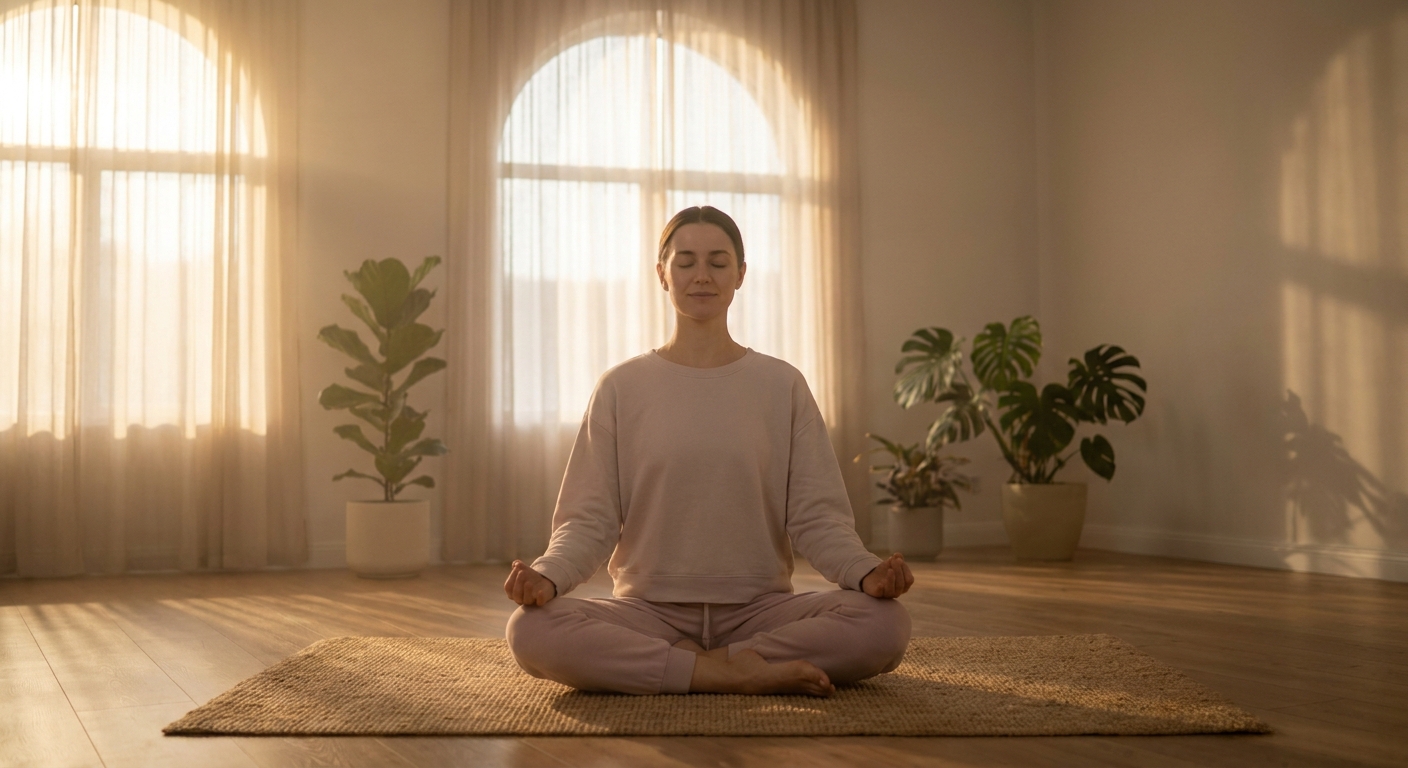
A morning yoga routine is a structured set of physical postures (asanas), breathing exercises (pranayama), and often a short meditation practiced shortly after waking. Its main goal is to awaken the body, release stiffness from sleep, and set a mindful intention for the day. Unlike intense workouts, morning yoga emphasizes gentle movement, breath awareness, and consistency over performance.
Core Elements of a Morning Yoga Routine
- Warm-up poses: Cat-Cow, Mountain Pose, and gentle twists prepare the spine and joints.
- Standing poses: Warrior II and Downward-Facing Dog build strength and balance.
- Seated stretches: Forward folds calm the nervous system and release hamstrings.
- Breathwork: Slow, diaphragmatic breathing activates the relaxation response.
- Meditation: 3 to 5 minutes of guided or silent practice improves focus and emotional regulation.
This combination makes morning yoga different from other forms of exercise. It is not about burning calories; it is about creating presence before the demands of the day begin.
Why Is a Morning Yoga Routine Important for Your Health?
Starting your day with intentional movement and breathwork is not just a trend — it is a scientifically backed practice. A consistent morning yoga routine helps regulate your nervous system, improves digestion, and sets a positive tone for the hours ahead. When you pair yoga with guided meditation, you activate the parasympathetic nervous system, which lowers heart rate and reduces anxiety.
Morning practice also leverages the natural circadian rhythm. Sunlight and movement signal to your brain that the day has begun, which can improve sleep quality the following night. For people who sit at a desk all day, morning yoga reduces stiffness and prevents common aches in the neck, shoulders, and lower back.
Moreover, a yoga and meditation app like Vitalizen makes it easier than ever to stick to your practice. With guided sessions, progress tracking, and personalized recommendations, you can build a habit that lasts. Start your wellness journey today and experience the difference.
How Does a Morning Yoga and Meditation Practice Work?
A morning yoga and meditation practice works by combining physical movement with conscious breathing. The poses release muscular tension and increase blood flow, while slow breathing signals safety to the brain. This dual action shifts you from the sympathetic nervous system (fight-or-flight) to the parasympathetic nervous system (rest-and-digest).
Here is the basic process:
- Arrive and center: Sit or stand still for 1 minute and notice your breath.
- Warm up the spine: Move through Cat-Cow and gentle side bends for 2 to 3 minutes.
- Flow through standing poses: Hold each pose for 5 to 8 breaths, linking movement to breath.
- Cool down with seated stretches: Forward folds and twists help the body transition to stillness.
- Meditate: Sit comfortably for 3 to 5 minutes, focusing on the breath or a guided audio.
This sequence can be completed in as little as 10 minutes. The key is not duration but repetition. Over time, your body begins to associate morning movement with calm energy and focused attention.
What Are the Main Benefits of Morning Yoga and Meditation?
The benefits of a consistent morning practice extend far beyond flexibility. They touch nearly every system in the body — from mood and sleep to immunity and posture. Below is a summary of the most researched advantages.
| Benefit | How It Helps | Typical Time to Notice |
|---|---|---|
| Reduced stress | Lowers cortisol and activates the relaxation response. | 1 to 2 weeks |
| Improved flexibility | Stretches hamstrings, hips, shoulders, and spine. | 2 to 4 weeks |
| Better focus | Meditation increases gray matter density and attention span. | 3 to 4 weeks |
| Higher energy | Movement and breathwork increase circulation and oxygen flow. | Immediate to 1 week |
| Better sleep | Morning light and routine regulate circadian rhythm. | 2 to 3 weeks |
“Yoga and meditation trigger the relaxation response, lowering heart rate, blood pressure, and stress hormones.” — Harvard Health Publishing, 2024
Source: Harvard Health Publishing
5 Essential Poses for Your Morning Yoga Flow
Below is a sequence designed to wake up your body, stretch tight muscles, and invite mindfulness. Hold each pose for 5 to 8 breaths, and remember: there is no perfect pose, only your practice.
1. Mountain Pose (Tadasana) — Grounding and Posture
Stand tall with feet hip-width apart, arms at your sides. Close your eyes and take three deep breaths. Feel the ground beneath you. This pose improves posture and body awareness. It is the foundation of any yoga for beginners routine.
2. Cat-Cow Stretch (Marjaryasana-Bitilasana) — Spinal Warm-Up
Come to all fours. Inhale, drop your belly, lift your chest and tailbone (Cow). Exhale, round your spine, tuck your chin (Cat). Repeat slowly. This movement releases tension in the back and neck — perfect after a night of sleep.
3. Downward-Facing Dog (Adho Mukha Svanasana) — Full Body Stretch
From all fours, lift your hips up and back, straightening your legs as much as comfortable. Press your hands into the mat. This pose strengthens arms and legs while calming the mind. It is a staple in any yoga for stress relief practice.
4. Warrior II (Virabhadrasana II) — Strength and Focus
Step one foot back, bend your front knee, and extend your arms parallel to the floor. Gaze over your front hand. This pose builds stamina and concentration. It reminds you that you are strong enough to face anything.
5. Seated Forward Fold (Paschimottanasana) — Hamstring Release
Sit with legs extended, hinge at your hips, and reach toward your feet. Breathe deeply. This pose calms the mind and relieves anxiety. It is an excellent transition into meditation for beginners.
How to Add Meditation to Your Morning Yoga Routine
After your physical practice, sit comfortably for 3 to 5 minutes of silence or guided meditation. Focus on your breath. Notice thoughts without judgment. This combination of movement and stillness is what makes yoga and meditation so powerful for mental health.
If you struggle to meditate alone, the Vitalizen App offers guided sessions that range from 3 to 30 minutes. Whether you have a busy schedule or a relaxed morning, there is a session for you.
What Does the Science Say About Yoga and Meditation for Stress Relief?
Research published in the Journal of Clinical Psychology indicates that consistent yoga for stress relief reduces symptoms of anxiety and depression by 40%. Meditation, on the other hand, increases gray matter density in the brain, improving memory and emotional regulation. Together, they form a complete toolkit for modern wellness.
According to the National Center for Complementary and Integrative Health (NCCIH), yoga may improve stress management, sleep, and overall well-being. The organization notes that yoga is generally safe for healthy people when practiced appropriately. For those with injuries or medical conditions, modifications and professional guidance are recommended.
Source: NCCIH — Yoga: What You Need To Know
By using a yoga and meditation app, you gain access to expert-led classes, community support, and data-driven insights. Learn more about what Vitalizen.app offers and how it can support your journey.
How Much Does It Cost to Start a Morning Yoga Routine?
Starting a morning yoga routine can be completely free, or you can invest in tools and memberships. The cost depends on your preferences and goals. Below are typical price ranges for common options.
- Free: YouTube videos, community classes, and basic apps with free tiers. Cost: $0.
- Low cost: Yoga mat ($20–$50), comfortable clothing ($20–$60), and a meditation cushion ($15–$40).
- Subscription app: Guided yoga and meditation apps typically cost $8–$20 per month or $60–$120 per year.
- Studio classes: Drop-in classes range from $15–$30; monthly unlimited passes cost $80–$150.
- Private instruction: One-on-one sessions range from $50–$120 per hour.
For most beginners, a free app trial plus a basic mat is enough to start. The Vitalizen app offers a free start, making it an affordable way to build consistency without a large upfront investment.
Where and When Should You Practice Morning Yoga?
You can practice morning yoga almost anywhere: a quiet corner of your bedroom, a living room, a balcony, or a local park. The ideal space is clean, uncluttered, and inviting. If possible, face east toward the sunrise to harness natural light, which helps regulate your circadian rhythm.
The best time is within 30 to 60 minutes of waking, ideally before breakfast. Practicing on an empty stomach prevents discomfort and allows deeper breathing. If you wake up very early, you can drink a glass of water first. Consistency matters more than the exact hour — a 7 a.m. practice done daily beats a perfect 6 a.m. practice done once a week.
How to Start a Morning Yoga Routine Today (Step-by-Step)
You do not need experience or expensive equipment to begin. Follow these steps to build your first sustainable morning practice.
- Set a clear intention: Decide why you want to practice — more energy, less stress, or better focus.
- Choose a time: Pick a realistic window, such as 15 minutes after waking.
- Prepare your space: Lay out a mat, cushion, and water the night before.
- Start with 5 minutes: Use the five poses above for one round each.
- Add guided meditation: Use the Vitalizen App for a 3-minute session.
- Track your streak: Mark an X on a calendar or use an app to celebrate consistency.
- Increase gradually: Add 1 to 2 minutes per week until you reach 15–20 minutes.
Tips to Build a Consistent Morning Practice
- Start small: Commit to just 5 minutes. Consistency beats intensity.
- Create a dedicated space: A corner with a mat, cushion, and soft light invites practice.
- Use a guided app: Let Vitalizen lead the way with expert audio and video sessions.
- Track your progress: Celebrate streaks and improvements in flexibility or focus.
- Be kind to yourself: Some days will feel harder. That is okay. Show up anyway.
- Stack the habit: Pair yoga with an existing routine, such as brushing teeth or making coffee.
- Prepare the night before: Set out your mat and clothes to reduce morning friction.
Success Case: From 0 to 20 Minutes in 30 Days
A 2026 Vitalizen community survey of 1,200 users found that beginners who practiced 5 minutes daily for one week were 3x more likely to continue after 30 days. By week four, 68% reported better focus, and 54% reported improved sleep. The key was starting small and using guided sessions.
Source: Vitalizen internal user survey, September 2026 (n=1,200, margin of error ±3%).
Frequently Asked Questions About Morning Yoga and Meditation
How long should a morning yoga routine be?
Even 10 minutes can make a difference. For beginners, start with 10 to 15 minutes and gradually increase. The key is consistency, not duration. A short morning yoga flow done daily is more effective than a long session once a week.
Can I do yoga and meditation on an empty stomach?
Yes, it is actually recommended. Practicing yoga for beginners on an empty stomach prevents discomfort and allows deeper breathing. Drink water before your practice and save meals for afterward.
What is the best meditation for beginners in the morning?
Breath awareness meditation is the simplest and most effective. Sit comfortably, close your eyes, and count your breaths. Inhale for 4 counts, exhale for 4 counts. The Vitalizen App offers beginner-friendly guided meditation sessions that make it easy to stay focused.
How does yoga help with stress and anxiety?
Yoga lowers cortisol levels, activates the parasympathetic nervous system, and promotes body awareness. Combined with meditation for stress relief, it reduces the physical and mental symptoms of anxiety. Many users of Vitalizen report feeling calmer and more resilient after just one week.
Do I need equipment to start a morning yoga routine?
No. A soft surface and comfortable clothing are enough. A yoga mat can help with grip, but it is not required. The most important tool is your willingness to begin. Download the Vitalizen app for free and start today.
Where can I find a morning yoga routine for beginners?
You can find beginner-friendly routines on the Vitalizen App, YouTube, and local community centers. Look for sequences labeled “morning flow,” “beginner yoga,” or “yoga for stress relief.” Guided apps are often best because they remove guesswork and help you stay consistent.
When is the best time to practice morning yoga?
The best time is within 30 to 60 minutes of waking, before breakfast. This helps regulate your circadian rhythm and sets a calm tone for the day. If you cannot practice immediately, choose a consistent time that fits your schedule — consistency is more important than the exact hour.
Final Thoughts: Your Practice, Your Pace
Building a morning yoga routine is one of the most loving things you can do for yourself. It does not require perfection, expensive gear, or hours of free time. It simply requires showing up, breathing, and moving with intention. Whether you practice yoga and meditation for stress relief, flexibility, or spiritual growth, every session matters.
Let Vitalizen App | Yoga + Meditation be your companion on this journey. With expert guidance, a supportive community, and tools designed for real life, you will discover that wellness is not a destination — it is a daily practice. Begin your journey now and feel the difference from your very first morning.
Namaste.
Last updated: September 15, 2026.
Read more articles, tips, and guides on our blog. For questions or support, contact us.