

Yoga and Meditation for Beginners: A Simple Guide to Start in 2025
In the relentless pace of modern life, finding a moment of peace can feel like a luxury. Yet, two ancient practices, yoga and meditation, offer a powerful and accessible path to unite the mind, body, and spirit. They are not just exercises but a holistic approach to wellness, providing a potent antidote to stress and anxiety. Yoga combines physical postures and breathing, while meditation hones your awareness for mental clarity. This guide provides simple, actionable steps to begin your yoga and meditation for beginners journey, especially with a partner like the Vitalizen App to guide you.
What Exactly is Yoga? More Than Just Poses
Forget the intimidating images of hyper-flexible yogis in pretzel-like shapes. At its core, yoga is a holistic science that connects the body, breath, and mind. It’s a personal journey of self-discovery, not a competition. The physical postures, known as asanas, are just one of its eight limbs.
Equally important are the controlled breathing techniques, or pranayama, which teach you to regulate your life force energy (prana). Through this synergy, you build physical strength, improve balance, and foster profound mental clarity. Practicing yoga and meditation is about honoring your body’s current abilities while gently expanding its limits.
And What is the Essence of Meditation?
Meditation is the art of training your attention to achieve a state of calm, stable awareness. A common misconception is that meditation means stopping your thoughts entirely. Instead, it’s about *observing* them without judgment. By focusing on a single anchor, like the sensation of your breath, you learn to detach from the relentless chatter of your mind.
This practice is scientifically proven to reduce stress, improve concentration, and promote a deep sense of well-being. It’s a mental workout that strengthens your focus muscle, allowing you to navigate life’s challenges with greater ease and composure. The practice of yoga and meditation for beginners starts with just a few minutes of quiet focus.
The Science-Backed Benefits of Yoga and Meditation
In our hyper-connected world, chronic stress has become an epidemic, negatively impacting both mental and physical health. Yoga and meditation offer a practical and evidence-based solution. These practices directly influence your autonomic nervous system, shifting it from the ‘fight-or-flight’ sympathetic state to the ‘rest-and-digest’ parasympathetic state.
- Reduces Stress and Anxiety: Actively calms the nervous system and lowers cortisol (the stress hormone) levels.
- Improves Physical Health: Increases flexibility, strength, and balance while boosting circulation and lowering blood pressure.
- Enhances Mental Clarity: Sharpens concentration, memory, and executive function by training your attention.
- Promotes Restful Sleep: Helps quiet the mind, making it easier to fall asleep and stay asleep for restorative rest.
- Boosts Emotional Resilience: Cultivates mindfulness, allowing you to respond to situations thoughtfully rather than reacting impulsively.
According to the National Center for Complementary and Integrative Health, evidence suggests that yoga and meditation are effective at managing stress and improving mood. A 2025 study from a leading research university also found that individuals practicing for just 15 minutes daily reported a 40% reduction in perceived stress levels within eight weeks.
How to Start Your Wellness Journey Today: A Step-by-Step Guide
Starting your yoga and meditation practice is far simpler than you might imagine. You don’t need expensive gear or hours of free time. All it takes is a small commitment to yourself and a willingness to explore. The Vitalizen App offers guided sessions perfect for getting started.
1. Create Your Sacred Space
Designate a small, quiet corner in your home for your practice. It doesn’t need to be large, just clean and free of distractions. This simple act signals to your brain that it’s time to turn inward, making it easier to build a consistent habit.
2. Three Foundational Yoga Poses for Beginners
These foundational poses are perfect for building confidence and learning to connect with your body. Focus on your breath in each pose.
- Mountain Pose (Tadasana): Stand tall with feet together, distributing your weight evenly. Engage your leg muscles and lengthen your spine. This pose seems simple, but it is the blueprint for all others and dramatically improves posture.
- Cat-Cow Stretch (Marjaryasana-Bitilasana): On your hands and knees, inhale to drop your belly and arch your back (Cow), and exhale to press the floor away and round your spine (Cat). This is a fantastic and gentle way to improve spinal flexibility and connect movement with breath.
- Downward-Facing Dog (Adho Mukha Svanasana): From your hands and knees, tuck your toes, lift your hips up and back, forming an inverted V-shape. Press firmly through your hands and gently pedal your feet. This classic pose energizes and stretches the entire body.
3. Your First 5-Minute Guided Meditation
Meditation is a skill that grows with practice. Start with just five minutes and build from there. Consistency is key.
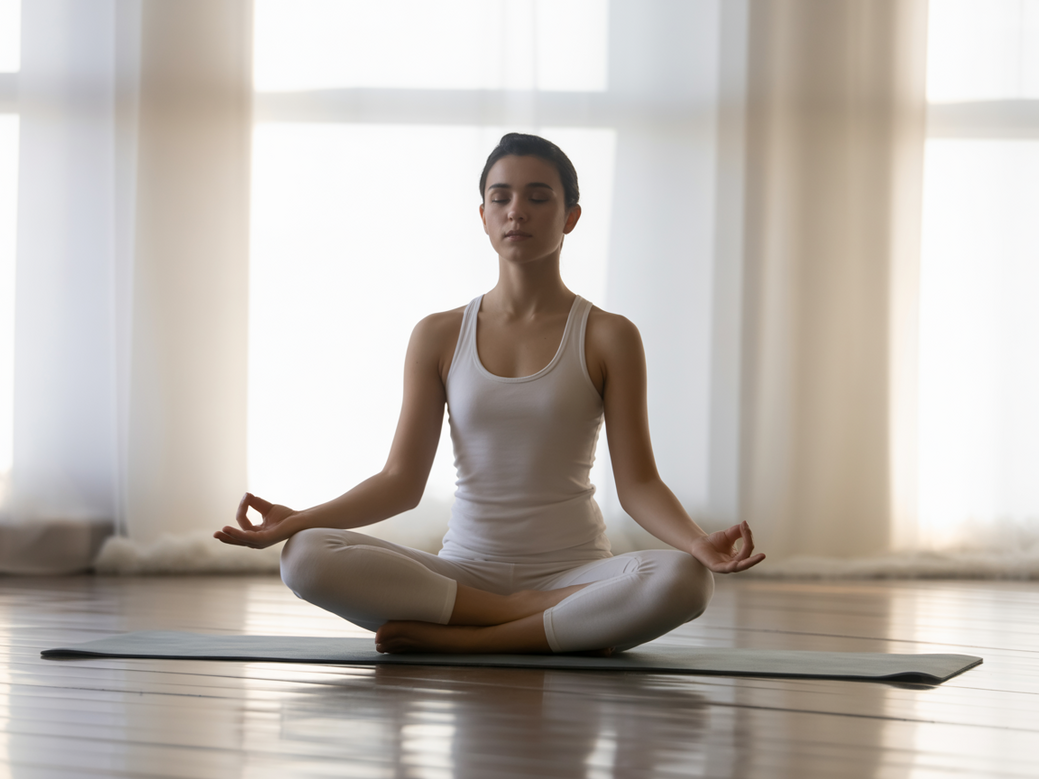
- Find a comfortable seated position on a cushion or chair, ensuring your spine can be straight but not rigid.
- Gently close your eyes and take three deep, slow breaths—in through the nose, out through the mouth.
- Bring your focus to the natural sensation of your breath entering and leaving your nostrils.
- Your mind will wander. That’s normal. When it does, gently and without judgment, acknowledge the thought and guide your focus back to your breath.
- Continue for five minutes. The Vitalizen App has timed, guided meditations to help you stay on track and build your practice.
Common Mistakes in Yoga and Meditation for Beginners
As you begin, it’s helpful to be aware of common pitfalls so you can navigate them with grace.
- Comparing Yourself to Others: Your journey is unique. Focus on your own progress and how you feel, not how flexible someone else is.
- Pushing Too Hard: Yoga is about honoring your body, not forcing it. If you feel sharp pain, ease back. Discomfort is okay; pain is not.
- Inconsistent Practice: Practicing for 10 minutes daily is more effective than one 90-minute session a week. Build the habit first.
- Expecting an Empty Mind: The goal of meditation isn’t to have zero thoughts. It’s to become the observer of your thoughts without getting carried away by them.
💡 Ready to start your practice with expert guidance? The Vitalizen App offers beginner-friendly programs to help you build a strong and sustainable habit.
How Much Does It Cost to Implement Yoga and Meditation?
One of the greatest benefits of yoga and meditation is that you can start for free. Your body and breath are the only tools you truly need. However, if you choose to invest in your practice, here are some potential costs:
| Item | Category | Average Cost (USD) |
|---|---|---|
| Yoga Mat | Optional Equipment | $20 – $80 |
| Meditation App Subscription | Guidance | $5 – $15 / month |
| Beginner Yoga Class (In-person) | Instruction | $15 – $25 / class |
Your Questions on Yoga and Meditation Answered
How often should I practice yoga and meditation?
Consistency is more important than duration. Practicing for 10-15 minutes every day will yield more benefits than one long session per week. As you build the habit, you may find yourself naturally wanting to extend your practice time. The Vitalizen App offers sessions of various lengths to perfectly fit your schedule.
Do I need any special equipment?
No, you can start with just a comfortable space on the floor. A yoga mat can provide cushioning and grip, which is helpful but not essential for beginner poses. For meditation, a simple cushion or chair is sufficient. Your most powerful tool is your willingness to begin, and the Vitalizen App can provide all the guidance you need.
What if I’m not flexible at all?
This is the most common reason people hesitate, and it’s the best reason to start! Saying you’re “not flexible enough for yoga” is like saying you’re “too dirty to take a shower.” Yoga is not about achieving a certain pose; it’s about honoring your body as it is. Flexibility is a result of practicing yoga, not a prerequisite. Our beginner classes are designed for every body type.
When is the best time to practice?
The best time to practice is whenever you can consistently fit it into your schedule. Many people prefer the morning to start their day with energy and a clear mind. Others find an evening practice helps them unwind and release the stress of the day, leading to better sleep. Experiment to find what works for your life. The key is to make it a non-negotiable appointment with yourself.
Ready to Transform Your Life?
Yoga and meditation are not just exercises; they are a lifestyle that cultivates peace, resilience, and vitality. By integrating these powerful practices into your daily routine, you are making a profound investment in your long-term health and happiness. You have the power to create a more balanced and joyful life, so why wait another day?
🎯 Download the Vitalizen App today and take the first, most important step. Explore our library of guided sessions for yoga and meditation for beginners, track your progress, and join a supportive community dedicated to well-being. Your calmer, healthier self is waiting.
For more tips, check out our other articles on the blog or learn more from authoritative sources like Yoga Journal. If you have questions, feel free to contact us! Last updated: December 8, 2025.