


How to Start Yoga in 2025: A Definitive Guide for Beginners
Are you ready to improve your physical and mental well-being but don’t know where to begin? Starting a yoga practice can feel intimidating, but it’s a transformative step towards a healthier, more balanced life. This guide provides a complete roadmap for anyone looking to start yoga in 2025, covering everything you need to begin your journey with confidence and achieve lasting success.
Last updated: December 15, 2025
What Exactly Is Yoga? More Than Just Poses
Yoga is a holistic mind and body practice with deep historical roots in ancient Indian philosophy. While modern culture often highlights the physical postures (asanas), yoga is a much richer discipline. It integrates these poses with pranayama (controlled breathing techniques) and meditation to cultivate a profound connection between your physical, mental, and spiritual self. The ultimate goal is to achieve harmony and balance.
For a beginner, this means learning to move your body in new, mindful ways, synchronizing movement with breath, and calming the relentless chatter of your mind. It is a journey of self-discovery and self-care, not a competition. You do not need to be flexible or strong to start yoga; those are the results of a consistent practice, not prerequisites.
Why Is Starting a Yoga Practice Crucial for Modern Well-being?
In our hyper-connected, fast-paced world, carving out time for yourself is more critical than ever. Yoga offers a sanctuary from daily stressors and provides a wealth of scientifically-backed health benefits. It’s a powerful investment in your long-term health that pays dividends both on and off the mat.
- Enhanced Flexibility and Mobility: Yoga asanas systematically stretch your muscles and lubricate your joints. A consistent practice leads to a greater range of motion, reducing stiffness and preventing injury.
- Significant Stress and Anxiety Reduction: The focus on deep breathing and mindfulness activates the parasympathetic nervous system, which lowers cortisol (the primary stress hormone) levels and promotes a state of calm.
- Increased Physical Strength and Tone: Many poses require you to support your own body weight in diverse ways, building functional strength in your core, arms, back, and legs without the need for equipment.
- Improved Posture and Balance: By strengthening your core and heightening body awareness, yoga for beginners helps correct the postural imbalances caused by prolonged sitting and screen time.
- Better Sleep Quality: A regular evening yoga practice can help quiet the mind and release physical tension, leading to faster sleep onset and more restorative rest.
According to research from the National Institutes of Health (NIH), 86% of people who practice yoga report a reduction in stress, and over 55% report improved sleep.
How to Start Your Yoga Practice Today: A 5-Step Plan
Getting started with yoga is far simpler than you might imagine. You don’t need to be an expert or own expensive gear. Follow these actionable steps to begin your journey with a solid foundation.
- Define Your “Why”: First, ask yourself what you hope to gain. Is it stress relief, increased flexibility, or building strength? Your personal intention will be your anchor, helping you stay motivated on days when you feel less inspired.
- Choose a Beginner-Friendly Style: Not all yoga is the same. Start with a style that is accessible and welcoming. We cover the best options for beginners in the next section.
- Gather Your Essential Equipment: All you truly need is a non-slip yoga mat and comfortable clothing that allows you to move without restriction. Props like blocks and straps are helpful but not mandatory at first.
- Create a Dedicated Practice Space: Designate a small, quiet area in your home where you can practice without distractions. Having a dedicated spot makes it easier to build a consistent habit.
- Start with Guided Instruction: Learning correct alignment is crucial to prevent injury and get the most from each pose. Use a trusted app like Vitalizen or find reputable beginner classes online.
Choosing the Right Yoga Style: A Beginner’s Guide
The style of yoga you choose can significantly impact your initial experience. Here are some of the best types of beginner yoga to explore:
- Hatha Yoga: This is an excellent starting point. Hatha classes are typically slower-paced, focusing on holding basic poses to learn alignment and build a foundational understanding of yoga.
- Vinyasa Yoga: Known for its flowing sequences, Vinyasa links movement with breath. Beginner Vinyasa classes are a great way to build heat and experience a more dynamic practice.
- Restorative Yoga: If your primary goal is relaxation and stress relief, this is the style for you. It uses props like bolsters and blankets to support your body in gentle, long-held poses, promoting deep rest.
- Iyengar Yoga: Characterized by its precise focus on alignment and the use of props (blocks, straps, chairs), Iyengar is fantastic for learning the mechanics of the poses safely.
7 Foundational Yoga Poses for Every Beginner
Mastering a few fundamental poses will give you a solid base for your practice. Focus on how the pose feels in your body rather than striving for a perfect shape. Here are seven essential asanas to start yoga with.
- Mountain Pose (Tadasana): The blueprint for all standing poses. It teaches grounding, posture, and full-body engagement.
- Cat-Cow Stretch (Marjaryasana-Bitilasana): A gentle, flowing sequence that warms up the spine and connects breath to movement, relieving back tension.
- Downward-Facing Dog (Adho Mukha Svanasana): An iconic pose that strengthens the arms and legs while stretching the entire back of the body. It’s a mild inversion that calms the nervous system.
- Warrior II (Virabhadrasana II): A powerful standing pose that builds strength in the legs and core while opening the hips and shoulders.
- Triangle Pose (Trikonasana): An excellent pose for stretching the hamstrings, hips, and spine while improving balance and stability.
- Bridge Pose (Setu Bandhasana): A gentle backbend that opens the chest, strengthens the back and glutes, and can help alleviate anxiety.
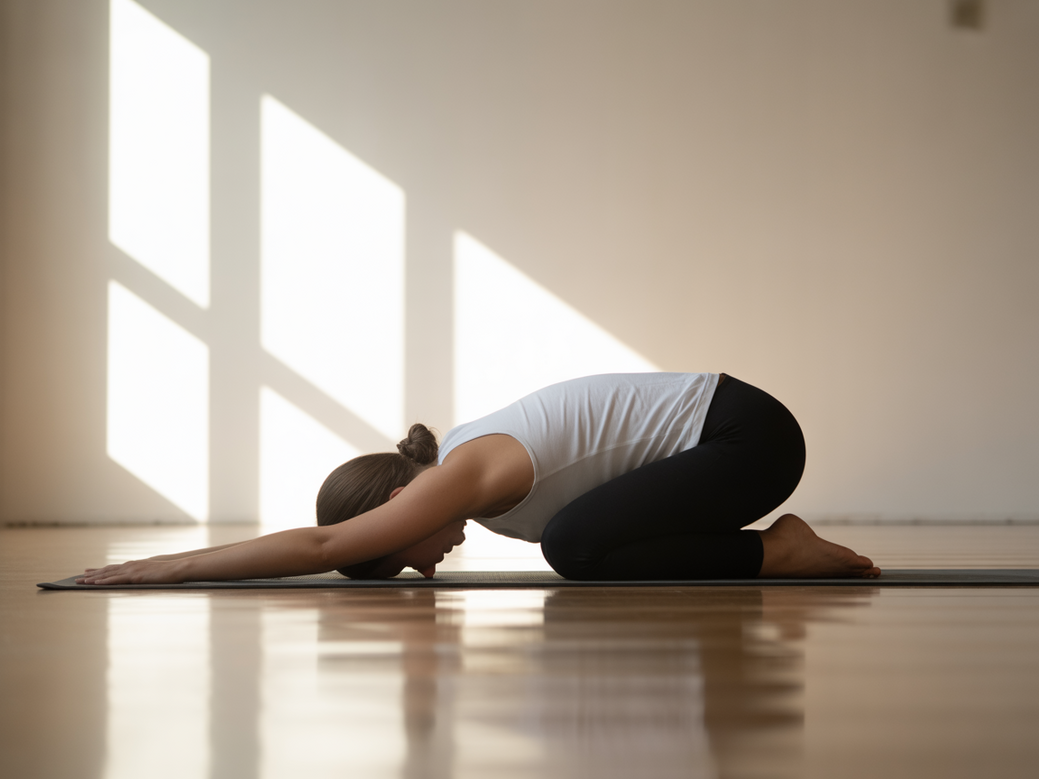
- Child’s Pose (Balasana): A restorative resting pose that gently stretches the hips and lower back. Use it anytime you need to rest and reconnect with your breath during practice.
Common Mistakes to Avoid When You Start Yoga
Navigating the beginning of your yoga journey is exciting, but a few common pitfalls can hinder progress. Being aware of them can help you build a sustainable and enjoyable practice.
- Pushing Too Hard, Too Soon: Yoga is a marathon, not a sprint. Pushing your body into painful positions leads to injury, not progress. Listen to your body’s signals.
- Comparing Yourself to Others: Your yoga journey is unique. Comparing your flexibility or strength to an instructor or fellow student is counterproductive. Focus on your own mat.
- Holding Your Breath: The breath (pranayama) is the life force of yoga. A common mistake is to hold your breath in challenging poses. Focus on maintaining a steady, deep breath.
- Inconsistent Practice: Practicing for 20 minutes three times a week is more effective than one 90-minute session every two weeks. Consistency is the key to seeing and feeling the benefits.
- Skipping Savasana (Corpse Pose): Don’t skip the final relaxation! Savasana allows your body and mind to absorb the benefits of the practice and is essential for integration.
🎯 Ready to start your practice with expert guidance? Download the Vitalizen App for structured beginner programs and daily classes!
How Much Does It Cost to Start Yoga?
The cost of starting a yoga practice can range from completely free to a significant monthly expense. It all depends on the path you choose. Here’s a breakdown of common options for beginners.
| Practice Method | Initial Cost | Ongoing Cost | Pros & Cons |
|---|---|---|---|
| At-Home (Free Resources) | $20 – $50 (Mat) | $0 | Pro: No cost, flexible. Con: Lacks structure and feedback. |
| Yoga App (e.g., Vitalizen) | $20 – $50 (Mat) | $10 – $30/month | Pro: Structured guidance, variety. Con: No in-person feedback. |
| In-Person Studio | $20 – $50 (Mat) | $100 – $200/month | Pro: Expert feedback, community. Con: Costly, less flexible. |
For more tips and guided practices, explore our articles on yoga and meditation.
Frequently Asked Questions About Starting Yoga
How often should a beginner do yoga?
For beginners, practicing 2-3 times per week for 20-30 minutes is an excellent start. This frequency allows your body to adapt and build strength without feeling overwhelmed. Consistency is far more important than duration, so a shorter, regular practice is more beneficial than one long session a week.
Do I need to be flexible to start yoga?
Absolutely not. This is the most common myth about how to begin yoga. Saying you’re “not flexible enough for yoga” is like saying you’re “too dirty to take a shower.” Yoga is the very tool you use to improve your flexibility. Every pose can be modified to meet you exactly where you are today.
What is the best time of day to practice yoga?
The best time is whatever time works for your schedule and energy levels. Many people prefer a morning practice to energize their body and set a positive tone. Others find an evening practice helps them unwind and prepare for restful sleep. Experiment to see what feels best for you and your body.
Your Journey Starts Now
Your yoga journey is a personal path of growth, and you don’t have to walk it alone. The most important step is the first one. Embrace the process with curiosity and self-compassion. We invite you to continue your journey with the guided practices in the Vitalizen App | Yoga + Meditation.
For further authoritative reading, you can explore studies on the psychological benefits of yoga from institutions like Harvard University.
💡 Tip: If you have questions or need support, don’t hesitate to contact our team. We’re here to help you succeed!