

Yoga for Beginners: Your Comprehensive 2026 Guide
Have you considered starting yoga but felt intimidated by complex poses and unfamiliar terms? You’re not alone. This guide is designed to demystify yoga for beginners and help you step onto the mat with confidence and clarity.
Yoga is a transformative practice that unites physical postures, breathing exercises, and meditation to enhance your total well-being. It’s not about achieving pretzel-like flexibility; it’s about creating a stronger, more mindful connection between your body and mind. At Vitalizen App | Yoga + Meditation, we champion the idea that yoga is for every single body. *Last updated: Jan 02 2026*
What Is Yoga, Really? Understanding the Core Principles
At its heart, yoga is an ancient practice designed to foster harmony. It’s more than just a workout; it’s a holistic discipline that nurtures your physical, mental, and emotional health. For those new to the practice, beginner yoga focuses on building a solid foundation with basic principles and safe alignment.
The core of the practice involves synchronizing your breath with a series of movements. This mindful connection is what sets yoga apart from other forms of exercise, turning your physical practice into a moving meditation that calms the nervous system and sharpens your focus.
The Transformative Benefits of a Consistent Yoga Practice
Embarking on a yoga journey unlocks a vast array of benefits that extend far beyond the mat. These advantages are both physical and mental, contributing to a healthier, more balanced life. Regular practice is an investment in your long-term well-being.
According to a 2026 industry report, 89% of new practitioners reported a significant reduction in stress within three months. This highlights yoga’s immediate impact on mental health.
Key Physical Benefits:
- Enhanced Flexibility: One of the most famous benefits. You’ll notice a gradual loosening of tight muscles and stiff joints, improving your range of motion.
- Increased Strength: Yoga utilizes your body weight to build lean, functional muscle across your entire body, from your core to your arms and legs.
- Improved Posture and Balance: By strengthening your core and heightening body awareness, beginner yoga helps you stand and sit taller, reducing chronic pain.
- Boosted Circulatory Health: The dynamic movements and deep breathing in yoga can improve blood flow and cardiovascular health.
Key Mental Benefits:
- Significant Stress Reduction: The potent combination of movement, breathwork, and mindfulness is a powerful antidote to modern-day stress.
- Enhanced Mental Clarity: The meditative aspects of yoga calm the mind’s chatter, improve focus, and cultivate a profound sense of inner peace.
- Better Sleep Quality: Many people find that a regular yoga practice helps them fall asleep faster and enjoy more restful sleep.
How to Start Yoga at Home: A Simple 5-Step Guide
Starting your journey with yoga at home is straightforward and requires minimal investment. You don’t need a fancy studio or expensive gear. Your practice can begin today with just a little space and an open mind. The most crucial step is the first one: deciding to begin.
- Find a Beginner-Friendly Resource: Use a guided app like Vitalizen, which offers sessions specifically designed for those new to yoga. This removes the guesswork.
- Create Your Practice Space: Designate a quiet, comfortable spot in your home where you can practice without distractions.
- Start with Short Sessions: Begin with a 15-20 minute practice. This makes it easier to build a consistent habit without feeling overwhelmed.
- Focus on Your Breath: Pay close attention to your breathing. In yoga, the breath (or *pranayama*) is the anchor for your movement and awareness.
- Practice Patience and Self-Compassion: Progress in yoga is not linear. Be kind to your body, celebrate small achievements, and never force a pose.
> 💡 **Tip:** Ready to start your wellness journey? Download the Vitalizen App for guided yoga and meditation sessions suitable for all levels.
5 Foundational Yoga Poses for Beginners
To begin, let’s explore five foundational easy yoga poses perfect for your first practice. These postures will help you build a strong and safe base. Remember to focus on how the pose feels in your body rather than striving for a perfect shape.
1. Mountain Pose (Tadasana)
Though it looks simple, Mountain Pose is an active posture and the blueprint for all standing poses. It is essential for improving posture, balance, and body awareness.
- How to do it: Stand with feet together or hip-width apart. Ground down through your feet, engage your leg muscles, lengthen your spine, and relax your shoulders. Keep arms by your sides, palms facing forward.
- Hold: Breathe deeply for 30-60 seconds.
2. Cat-Cow Stretch (Marjaryasana-Bitilasana)
This gentle, flowing movement is perfect for warming up the spine and relieving tension in the back and neck. It perfectly illustrates the connection between breath and movement in yoga for beginners.
- How to do it: Start on your hands and knees. As you inhale (Cow), drop your belly and look up. As you exhale (Cat), round your spine and tuck your chin.
- Flow: Continue for 5-10 breath cycles.
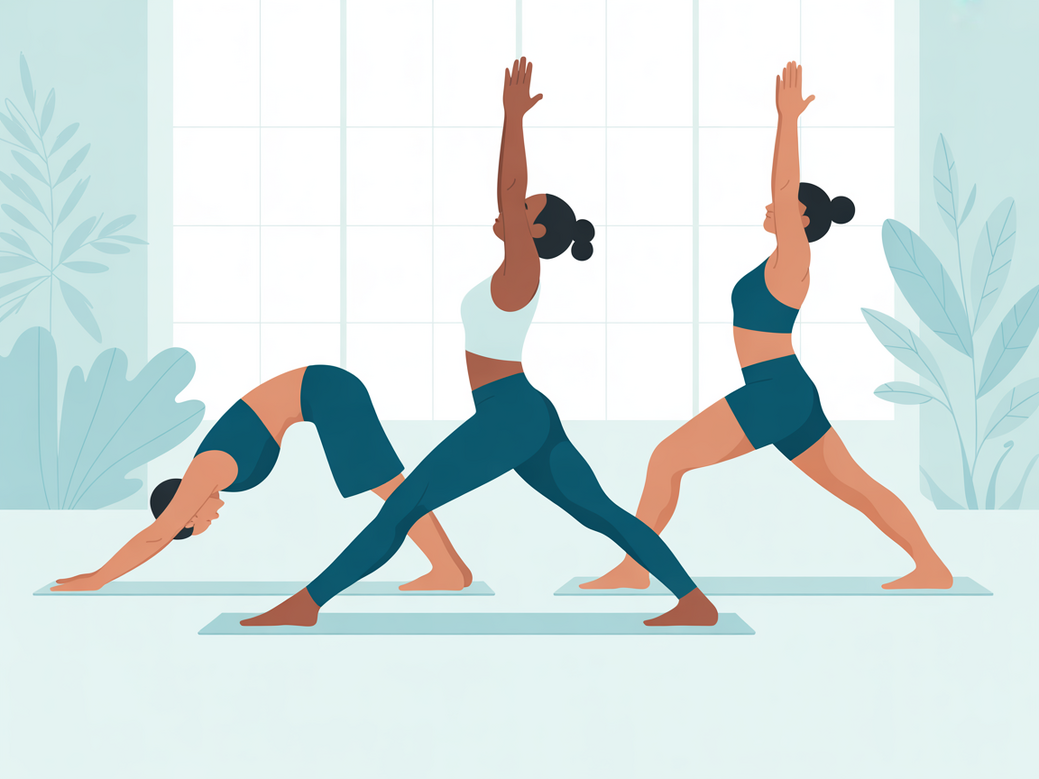
3. Downward-Facing Dog (Adho Mukha Svanasana)
As one of yoga’s most iconic poses, Downward-Facing Dog provides a full-body stretch. It strengthens the arms and legs while lengthening the hamstrings and calming the mind.
- How to do it: From hands and knees, tuck your toes and lift your hips up and back into an inverted V-shape. Keep your head between your arms. Bending your knees is highly encouraged to maintain a long, straight spine.
- Hold: Stay for 5-8 deep breaths.
4. Warrior II (Virabhadrasana II)
Warrior II is a powerful standing pose that builds strength in the legs and opens the hips and chest. It cultivates a sense of focus and determination.
- How to do it: Step your feet wide apart. Turn your right foot out 90 degrees. Bend your right knee over your ankle and extend your arms parallel to the floor. Gaze over your right fingertips.
- Hold: Hold for 30 seconds, then repeat on the other side.
5. Child’s Pose (Balasana)
Child’s Pose is a restorative posture perfect for taking a break. It gently stretches the hips and back while calming the nervous system and reducing fatigue.
- How to do it: Kneel, sit back on your heels, and fold forward, resting your forehead on the mat. Your arms can be extended forward or rest alongside your body.
- Hold: Relax here for as long as feels good.
Choosing the Right Yoga Style for You
The world of yoga is diverse, with many different styles to explore. For a beginner, it’s helpful to know the most common types so you can choose one that aligns with your goals.
- Hatha Yoga: A great starting point. Classes are typically slower-paced and focus on holding basic poses to learn alignment.
- Vinyasa Yoga: Known for its flowing, dynamic sequences that link breath to movement. It’s more fast-paced and can be a great workout.
- Restorative Yoga: Uses props like blankets and bolsters to support your body in gentle, restful poses held for longer periods. It’s excellent for deep relaxation.
- Yin Yoga: A quiet, meditative practice that targets deep connective tissues by holding passive floor poses for several minutes.
What to Expect: Your First Yoga Experience
Your first time practicing yoga should be an experience of exploration, not expectation. Whether you’re at home or in a studio, remember that everyone was a beginner once. You might feel a bit awkward, and that’s completely normal. The instructor will guide you through the poses, but always listen to your own body’s limits.
Don’t worry about what others are doing. The goal is not to compete but to connect with yourself. Focus on your breath, move with intention, and allow yourself to be present in the moment. This is the essence of how to start yoga.
The Cost of Starting a Yoga Practice
The investment in your yoga practice can be tailored to your budget. You have several options, from completely free to more premium experiences.
- Free to Low Cost (At Home): The most accessible option. Use free online videos or a budget-friendly app like Vitalizen. Your only real cost is a one-time purchase of a yoga mat ($20-$50).
- Moderate Cost (Studio Classes): Group classes offer hands-on instruction. Drop-in rates are typically $15-$25, while monthly memberships can range from $80-$200.
- High Cost (Private Instruction): For personalized, one-on-one guidance, a private instructor can cost $60-$150 per hour.
> 🎯 **Ready to deepen your practice?** For more tips and guidance, check out our articles on yoga and meditation.
Frequently Asked Questions About Yoga for Beginners
How many times a week should a beginner do yoga?
For beginners, practicing yoga 2-3 times a week is a great start. This frequency allows your body to adapt, build strength, and improve flexibility without overdoing it. Consistency is more important than frequency, so a sustainable routine is key.
What if I’m not flexible?
This is a common concern, but you don’t need to be flexible to start yoga. In fact, saying you’re not flexible enough for yoga is like saying you’re too dirty to take a bath. Yoga is the practice that builds flexibility. Listen to your body and never force a pose.
Do I need any special equipment to start yoga?
A yoga mat is highly recommended for comfort and grip. Comfortable, stretchy clothing is also essential. Props like yoga blocks and straps are helpful for modifying poses but are not necessary when you first start your beginner yoga journey.
Can yoga help with weight loss?
Yes, yoga can be a powerful tool for weight loss. Active styles like Vinyasa burn calories, while the practice as a whole promotes mindfulness, which can lead to healthier eating habits and reduced stress-related eating. It also builds lean muscle, boosting your metabolism.
How long should a yoga session for a beginner be?
A beginner’s session can be as short as 15-20 minutes. It’s more important to establish a regular habit than to practice for a long duration. You can gradually increase the length as your stamina and interest grow.
We hope this guide has empowered you to begin your yoga for beginners journey. Remember, the most important step is showing up for yourself. If you have questions, feel free to contact us. Learn more about what Vitalizen.app is and how we can support your well-being.
For further reading from authoritative sources, visit this article from Johns Hopkins Medicine or this resource from Stanford University’s well-being program (.edu).