

Meditation for Beginners: A Practical Guide to a Calmer Mind in 2026

In our fast-paced 2026 world, finding a moment of peace can feel like a luxury. **Meditation** is a mental practice that trains attention and awareness to achieve a state of mental clarity and emotional calm. This guide explains how this simple practice can profoundly change your life and how the Vitalizen App | Yoga + Meditation can be your perfect companion on this journey.
What Is Meditation, Really?
At its core, meditation is an exercise for your mind. Much like you go to the gym to train your body, **meditation** is a way to train your mind to be more focused, calm, and present. It involves a set of techniques that encourage a heightened state of awareness and focused attention. You are not trying to turn off your thoughts or feelings, but rather to observe them without judgment.
This practice of mindfulness helps you understand your own mind. As you become more aware of your thought patterns, you can learn to manage them more effectively, leading to a more serene and peaceful state of being. It’s a skill that can be developed with consistent practice, and its benefits are cumulative.
Why Is Meditation Essential for Your Well-being?
The demands of modern life have led to unprecedented levels of stress and burnout. Meditation offers a powerful, science-backed antidote. It provides the mental space needed to disconnect from the constant stream of digital notifications and external pressures, allowing your nervous system to reset.
According to a 2026 report from the Global Wellness Institute, 78% of people who practice meditation for at least 10 minutes daily report a significant decrease in work-related stress within three months.
Investing in your mental health through this mindfulness practice isn’t a luxury; it’s a fundamental component of a healthy and balanced lifestyle. It equips you with the resilience to navigate life’s challenges with greater ease and composure.
The Science Behind How Meditation Works
Meditation works by shifting your attention from the chaotic external world to your calm internal one. The process typically involves finding a quiet space, adopting a comfortable posture, and focusing on a single point of reference, such as your breath, a mantra, or bodily sensations. When your mind wanders—which it inevitably will—the practice is to gently bring your focus back to your anchor.
This simple act of redirection strengthens the neural pathways associated with focus and emotional regulation. Research from institutions like The National Center for Complementary and Integrative Health (NCCIH) shows that regular meditation can actually change the structure and function of the brain, a phenomenon known as neuroplasticity.
Common Types of Meditation for Beginners
There are many ways to meditate. Finding the right one for you can make the practice more enjoyable and sustainable. Here’s a comparison of a few popular styles:
| Meditation Type | Primary Focus | Best For | Average Session |
|---|---|---|---|
| Mindfulness Meditation | Breath and bodily sensations | Beginners, stress reduction | 10-20 minutes |
| Guided Meditation | Voice-led instructions | Those who need structure | 5-30 minutes |
| Walking Meditation | The physical act of walking | People who struggle to sit still | 15-30 minutes |
| Transcendental Meditation | Silent mantra repetition | Deeper states of relaxation | 20 minutes (twice a day) |
What Are the Main Benefits of Meditation?
The positive effects of meditation extend to nearly every aspect of your life. With consistent practice, you can unlock a wide range of physical and mental benefits. The Vitalizen App offers targeted sessions to help you achieve these specific outcomes.
- Reduces Stress and Anxiety: One of the most celebrated benefits is stress reduction. Meditation lowers cortisol, the stress hormone, promoting a sense of calm. A study in the Journal of Nervous and Mental Disease confirmed its effectiveness in treating anxiety.
- Improves Focus and Concentration: By training your attention, you enhance your ability to concentrate for longer periods, boosting productivity at work or during study. Learn more about improving focus on our blog.
- Enhances Sleep Quality: Meditation quiets the mental chatter that often interferes with sleep. The Vitalizen App has specific sleep meditations to help you drift off peacefully.
- Promotes Emotional Health: Regular practice can lead to an improved self-image and a more positive outlook on life. It helps you build skills for managing difficult emotions.
- Supports Physical Health: Studies have shown that meditation can contribute to lowering blood pressure and improving immune response.
🎯 **Ready to start feeling these benefits?** Download the Vitalizen App and begin your journey!
How to Start Your Meditation Practice Today: A 5-Step Guide
Starting to meditate can seem intimidating, but it’s simpler than you think. The Vitalizen App makes it easy and accessible. Here is a step-by-step guide to your first session:
- Find a Quiet Place: Choose a spot where you won’t be disturbed for 5-10 minutes. It could be a chair in a quiet room or a peaceful corner of a park.
- Set a Timer: Start with a short duration, like 5 minutes. The Vitalizen App has flexible session lengths perfect for beginners.
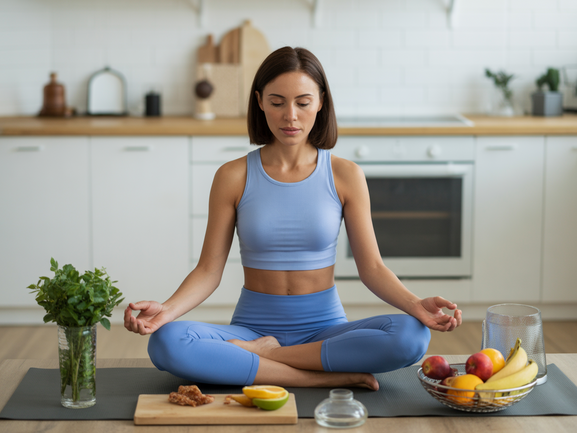
- Get Comfortable: Sit or lie down in a comfortable position. You can sit on a chair with your feet on the floor, cross-legged on a cushion, or lie on your back. Keep your back straight but not stiff.
- Focus on Your Breath: Close your eyes gently. Bring your attention to the physical sensation of your breath—the air entering your nostrils, the rise and fall of your chest. This is a core technique of mindfulness.
- Gently Return Your Focus: Your mind will wander. When you notice your thoughts drifting, gently and without judgment, guide your attention back to your breath. This is the core of the practice of meditation.
Overcoming Common Challenges in Meditation
It’s normal to face a few hurdles when you start your meditation journey. Here are some tips for overcoming them:
- “I can’t stop thinking!”: This is the most common misconception. The goal isn’t to stop thoughts, but to notice them without getting carried away. Acknowledge the thought and gently guide your focus back to your breath.
- Feeling Restless or Fidgety: If sitting still is hard, try a walking meditation. Focus on the sensation of your feet on the ground. You can also try shorter, more frequent sessions.
- Falling Asleep: If you often feel drowsy, try meditating in a more upright, seated posture rather than lying down. Meditating in the morning can also help.
Ready to boost your productivity and well-being? Start your wellness journey now and discover more tips on our blog, full of articles, news, and tips on yoga and meditation.
Frequently Asked Questions (FAQ)
How long does it take to see the benefits of meditation?
While some people report feeling calmer after their very first session, the long-term benefits of meditation, such as reduced stress and improved focus, are typically noticeable after a few weeks of consistent practice. The key is regularity, not duration. Even 5 minutes a day is more effective than one long session per week.
Do I need any special equipment to meditate?
No, you don’t need any special equipment for your meditation practice. All you need is a quiet place where you won’t be disturbed. You can sit on a chair, a cushion, or even lie down. The Vitalizen App is your portable guide, so you can meditate wherever you are, using just your phone.
Is meditation a religious practice?
Although meditation has roots in many spiritual traditions, the practice itself is not religious. It is a mental exercise to promote well-being and awareness. The Vitalizen App focuses on the practical and scientific benefits of meditation for modern life, free from any religious dogma.
How much does it cost to learn meditation?
Meditation can be completely free. You can practice on your own without any cost. However, many people find value in using apps like Vitalizen for guided sessions, which often come with a subscription fee. There are also courses and retreats that represent a larger investment. For beginners, starting with a free or low-cost app is a great way to build a habit.
What is the best time of day to meditate?
The best time to meditate is whenever you can consistently fit it into your schedule. Many people prefer meditating in the morning to start their day with a sense of calm and focus. Others find it helpful to meditate during a lunch break to reset or in the evening to unwind before sleep. Experiment and see what works best for your meditation routine.