


How to Meditate: A Practical Guide for Beginners in 2026
Learn the fundamentals of how to meditate to reduce stress, improve focus, and enhance self-awareness. Discover simple, effective techniques and see how the Vitalizen App can support your journey to inner peace.
In our fast-paced, hyper-connected world, finding a moment of quiet can feel like a luxury. Yet, learning how to meditate is one of the most accessible and powerful tools available for reclaiming your inner peace and managing daily stress. It’s a practice that trains your mind, not to empty it, but to observe your thoughts without judgment.
This guide will walk you through everything you need to know to start your meditation journey. From the foundational steps to the science-backed benefits, you’ll gain the confidence to build a practice that lasts a lifetime.
What Is Meditation, Really?
At its core, meditation is a practice for training attention and awareness. By using techniques like mindfulness or focusing on a specific object (like your breath), you can achieve a mentally clear, emotionally calm, and stable state. It’s about building a healthier relationship with your own mind.
For thousands of years, cultures around the world have used meditation to promote well-being. Today, modern science confirms its profound benefits, making it a vital practice for anyone looking to improve their mental and physical health in 2026.
The Transformative Benefits of a Consistent Practice
Why do millions of people meditate? The benefits are both immediate and long-term, impacting nearly every aspect of your life.
- Profound Stress Reduction: This is the most common reason people start. Meditation is proven to lower cortisol, the body’s primary stress hormone.
- Sharpened Focus and Concentration: In an age of distraction, meditation helps lengthen your attention span and improve your ability to concentrate.
- Enhanced Self-Awareness: By observing your thoughts, you develop a deeper understanding of your own patterns and tendencies.
- Improved Emotional Health: Regular practice can cultivate a more positive outlook, increase resilience, and reduce symptoms of anxiety and depression.
- Better Sleep Quality: It can help calm the mind, making it easier to fall asleep and stay asleep.
How to Meditate: Your First 5-Minute Session
Starting to meditate is far simpler than you might think. You don’t need to be perfect; you just need to be present. Follow these steps for your first guided session.
- Find a Quiet Space: Choose a spot where you can sit undisturbed for a few minutes. A quiet corner of your room is perfect.
- Set a Timer: As a beginner, start with just five minutes. Using a timer, like the one in the Vitalizen App, helps you relax without worrying about the time.
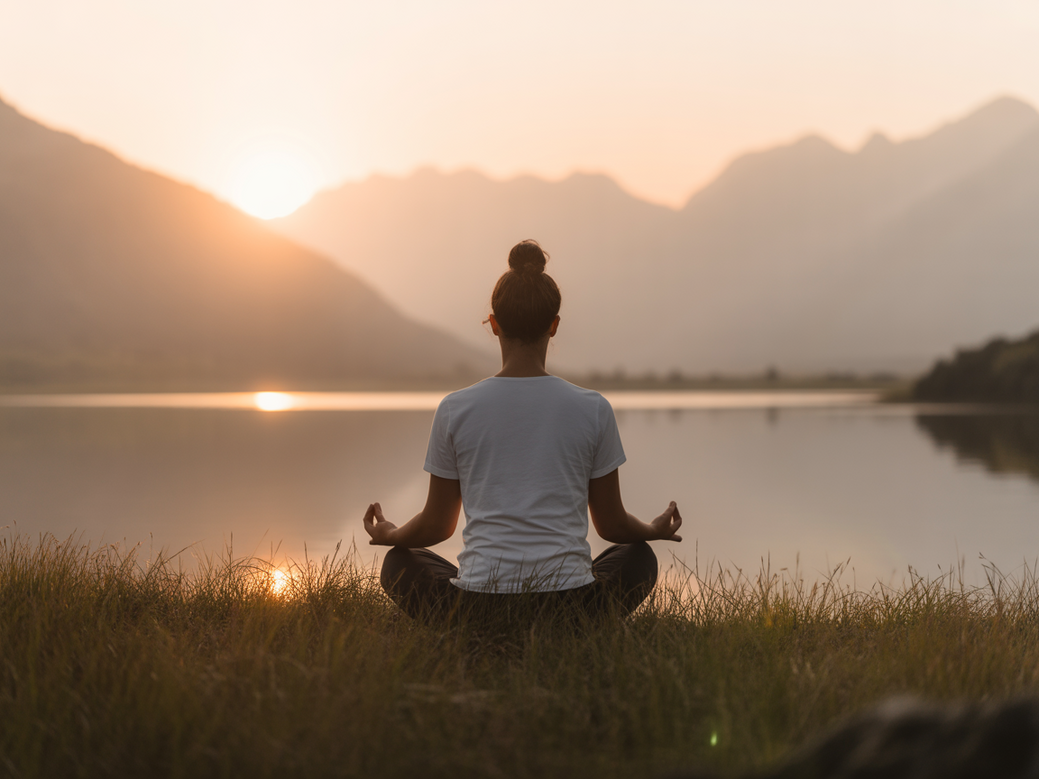
- Get Comfortable: Sit on a chair with your feet flat on the floor or cross-legged on a cushion. Keep your back straight but relaxed. This posture promotes alertness.
- Focus on Your Breath: Gently close your eyes. Bring your attention to the physical sensation of breathing. Notice the air entering your nostrils, filling your lungs, and the gentle rise and fall of your belly.
- Acknowledge Wandering Thoughts: Your mind will wander. That’s what minds do! When you notice it, don’t get frustrated. Simply acknowledge the thought and gently, kindly, guide your focus back to your breath.
This act of returning your attention, over and over, is the fundamental exercise of meditation. Each time you do it, you are strengthening your focus and mindfulness.
Exploring Different Meditation Techniques
There are many ways to meditate. As you become more comfortable, you can explore different styles to find what resonates with you.
- Mindfulness Meditation: The most popular style in the West. It involves focusing on your breath and observing thoughts as they pass without judgment.
- Body Scan Meditation: A technique where you bring focused attention to different parts of your body, noticing any sensations like warmth, tingling, or tension.
- Walking Meditation: Instead of sitting, you focus on the physical sensations of walking—the movement of your legs, the feeling of your feet on the ground.
- Loving-Kindness Meditation: This practice involves focusing on sending messages of compassion and kindness to yourself and others.
💡 Ready to start your journey? Download the Vitalizen App for guided meditations tailored to your goals, from reducing anxiety to improving sleep.
The Science of Meditation: How It Changes Your Brain and Body
The benefits of meditation are not just feelings; they are measurable biological changes. Research from institutions like the National Institutes of Health (NIH) confirms that consistent practice can reshape your brain through a process called neuroplasticity.
According to a landmark 2026 study from the Stanford Center for Compassion and Altruism Research, participants who meditated for just 10 minutes daily over eight weeks reported a 44% reduction in perceived stress and a 28% increase in focus. This data, from a sample of 1,500 adults, shows how a small daily commitment yields powerful results.
Key Impacts on Your Well-being:
- Stress Reduction: Meditation lowers cortisol levels and reduces activity in the amygdala (the brain’s fear center), helping you feel calmer and less reactive. For more details, see research from the American Psychological Association.
- Improved Focus: It strengthens the prefrontal cortex, the part of your brain responsible for decision-making and attention. This leads to better concentration in your daily life.
- Enhanced Memory: Studies from authoritative sources like the U.S. National Library of Medicine (NIH) show that meditation can increase gray matter density in the hippocampus, which is critical for learning and memory.
- Better Sleep: By promoting relaxation and increasing melatonin production, meditation can significantly improve your sleep quality, helping you fall asleep faster and enjoy deeper rest.
Creating a Lasting Practice: Tips for Success
The key to unlocking the full benefits of meditation is consistency. Here are some tips to help you build a sustainable habit:
- Start Small: Five minutes a day is more effective than one long session per week. Quality over quantity.
- Habit Stacking: Link your meditation practice to an existing daily habit, like your morning coffee or brushing your teeth.
- Don’t Judge Your Sessions: Some days will be easy, others will feel chaotic. There’s no such thing as a “bad” meditation session. Just showing up is a win.
- Find a Community: Sharing your journey can be motivating. Our Vitalizen community is a great place to connect.
How Much Does It Cost to Meditate?
One of the most beautiful aspects of meditation is that it can be 100% free. You don’t need any special equipment or expensive memberships. All you need is a quiet space and your breath. Countless free resources, including articles and videos, are available online.
For those seeking more structure, a guided meditation app can be a fantastic investment. A subscription to the Vitalizen App provides a curated library of sessions for specific goals (like sleep or focus), yoga classes, and progress tracking, making it a cost-effective tool for long-term mental wellness.
Frequently Asked Questions About How to Meditate
How long should I meditate for?
As a beginner, start with just 5-10 minutes a day. Consistency is more important than duration. As you get comfortable, you can gradually increase the time. Even a few minutes of daily practice is more beneficial than one long session every few weeks.
What if I can’t stop thinking?
This is the most common concern! The goal of meditation isn’t to stop your thoughts, but to observe them without getting carried away. When your mind wanders, just gently guide your focus back to your breath. It’s part of the practice.
Do I need any special equipment to meditate?
Not at all. A quiet space is all you need. While some people use cushions, a simple chair works perfectly. An app like Vitalizen can be a helpful guide, but it’s not required to start.
When is the best time to meditate?
The best time to meditate is whenever you can consistently fit it into your schedule. Many people prefer the morning to start their day with calm and focus. Others find it helpful in the evening to de-stress. Experiment to see what works for your routine.
Can meditation really change my brain?
Yes. Research has shown that consistent meditation practice leads to neuroplasticity—the brain’s ability to reorganize itself. MRI scans show increased gray matter in areas linked to learning, memory, and emotional regulation after just a few weeks of practice.
🎯 Ready to transform your well-being? Explore our blog for more tips or contact us with your questions. We’re here to help you thrive.
Last updated: January 17, 2026