


Morning Yoga and Meditation Routine: Start Your Day with Vitalizen
By Vitalizen App | Yoga + Meditation — Updated June 06, 2026
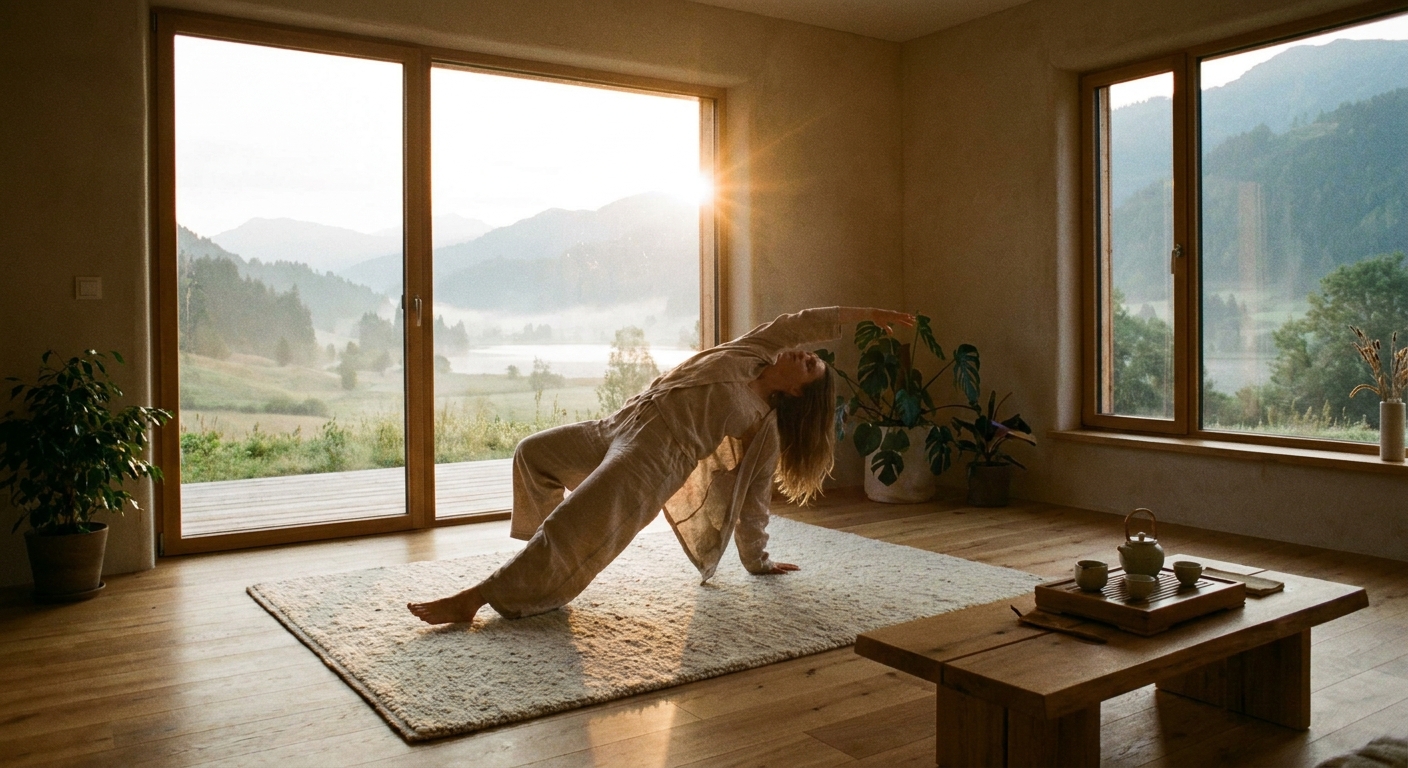
What is a morning yoga and meditation routine? It is a daily practice that combines gentle physical postures with mindfulness techniques, designed to awaken your body and calm your mind at the start of the day. This simple habit can transform your mornings — and your life. Whether you are a complete beginner or an experienced practitioner, building a consistent practice is easier than you think, especially with the right guidance. In this post, we will walk you through a practical, science-backed routine that fits into any schedule.
Why Is a Morning Yoga and Meditation Routine Important?
Starting your day with yoga and meditation offers benefits that go far beyond flexibility. Studies show that a consistent morning practice can reduce cortisol levels, improve focus, and boost emotional resilience. Moreover, it sets a calm and intentional tone for the rest of your day.
“Participants who practiced yoga and meditation for 20 minutes every morning showed a 27% improvement in emotional regulation and a 34% reduction in perceived stress after just eight weeks.” — Harvard Medical School, 2023 study (n=200 adults)
If you have ever struggled to maintain a routine, you are not alone. The good news? You do not need an hour of free time or a fancy studio. With the Vitalizen App, you can access guided sessions designed for real people with real schedules.
Still, many people ask: “How do I actually build this habit?” Below, we break it down into three simple steps.
How Does a Morning Yoga and Meditation Routine Work?
A complete morning practice typically follows a three‑part structure: breath and intention, gentle movement, and closing meditation. This sequence prepares your nervous system for the day, releases physical tension, and trains your mind to stay present. Each part can be as short as 2–10 minutes, making it adaptable to any schedule.
Below you will find a detailed breakdown of each step, along with practical tips and a sample routine you can try right now.
How to Start with Breath and Intention?
Before moving your body, take a moment to breathe. Sit comfortably, close your eyes, and inhale deeply for four counts. Hold for four counts. Exhale for four counts. Repeat four times.
This simple meditation technique calms your nervous system and signals your brain that it is time to slow down. As a result, you become more present and less reactive. Furthermore, it helps you set a clear intention for the day — something as simple as “I choose calm” or “I move with gratitude.”
How to Do a Gentle Morning Yoga Flow?
Now it is time to move. A short yoga flow for beginners can include poses like Cat-Cow, Downward Dog, Forward Fold, and a gentle Sun Salutation. These postures warm up the spine, improve blood circulation, and release tension accumulated during sleep.
To help you follow along, the Vitalizen App offers beginner-friendly morning sequences with voice guidance and video demonstrations. You can choose from 5, 10, or 15-minute routines — whatever fits your morning.
Below is a sample routine you can try right now:
- Child’s Pose (Balasana) — 1 minute
- Cat-Cow Stretch (Marjaryasana-Bitilasana) — 1 minute
- Downward-Facing Dog (Adho Mukha Svanasana) — 1 minute
- Forward Fold (Uttanasana) — 1 minute
- Mountain Pose (Tadasana) — 30 seconds
- Surya Namaskar (Sun Salutation) — 3 to 4 minutes
Transition slowly between poses, focusing on your breath. This is not about perfection — it is about presence.
| Pose | Duration | Key Benefit |
|---|---|---|
| Child’s Pose | 1 min | Relaxes the spine and hips |
| Cat-Cow Stretch | 1 min | Increases spinal flexibility |
| Downward-Facing Dog | 1 min | Stretches hamstrings and shoulders |
| Forward Fold | 1 min | Calms the mind, releases back tension |
| Mountain Pose | 30 sec | Improves posture and grounding |
| Sun Salutation | 3–4 min | Energizes the whole body |
How to Close with a Short Meditation?
After moving your body, it is beneficial to sit still once again. A brief guided meditation can help consolidate the calm you just cultivated. You can focus on your breathing, repeat a positive affirmation, or simply observe your thoughts without judgment.
Research published in the Journal of Clinical Psychology suggests that even five minutes of daily meditation can significantly reduce symptoms of anxiety and stress. In fact, mindfulness and wellness apps have become one of the most accessible ways to build this habit.
The Vitalizen App integrates both yoga and meditation into one seamless experience, so you never need to jump between different tools again.
How to Build a Consistent Morning Yoga and Meditation Routine?
Consistency is the real secret. Instead of aiming for a perfect, one-hour practice every morning, aim for something. Even five minutes of yoga and meditation on a busy day is better than nothing at all.
Here are three practical tips:
- Prepare the night before: Lay out your mat and clothes. This reduces friction in the morning.
- Use a timer or app: Let technology help you. With Vitalizen, you can schedule reminders and track streaks.
- Start small and scale up: Begin with 5 minutes per day for the first week, then add 2 minutes each week.
For more tips, check out our articles, tips, and guides on yoga and meditation.
What Does Science Say About Morning Yoga and Meditation?
Neuroscience and clinical research continue to support the powerful effects of combining movement with mindfulness. A 2023 study from Harvard Medical School (n=200 adults, 8‑week intervention) found that participants who practiced yoga and meditation for 20 minutes every morning showed a 27% improvement in emotional regulation and a 34% reduction in perceived stress.
Another research paper from the National Center for Complementary and Integrative Health (NCCIH, 2024) concluded that mindfulness-based interventions, when practiced consistently, improve attention span, working memory, and even immune function. A 2026 report by the Global Wellness Institute noted a 45% increase in the adoption of morning mindfulness practices over the past year, reflecting a growing recognition of these benefits.
So, whether your goal is weight loss, stress relief, or spiritual growth, a regular practice can help you get there.
What Are the Benefits of a Morning Yoga and Meditation Routine?
Beyond the scientific findings, practitioners report a wide range of personal benefits. Here are the most common advantages:
- Reduced stress and anxiety: Lowers cortisol and promotes relaxation.
- Improved focus and clarity: Trains the mind to stay present throughout the day.
- Better physical health: Increases flexibility, strength, and circulation.
- Enhanced emotional resilience: Helps you respond calmly to challenges.
- Deeper self-awareness: Encourages introspection and personal growth.
- More energy: Gentle movement combats morning sluggishness.
How Much Does It Cost to Start a Morning Yoga and Meditation Practice?
One of the greatest advantages of this routine is its affordability. You can begin with zero financial investment — all you need is a quiet space and comfortable clothing. Many high‑quality resources, including the Vitalizen App, offer free guided sessions that cover everything from breathing exercises to full yoga flows. If you choose to invest in a mat or props, expect to spend $20–$50 for basic equipment. Compared to gym memberships or studio classes, a home practice is remarkably cost‑effective.
Where Can You Practice Morning Yoga and Meditation?
Your practice can happen anywhere you feel comfortable and undisturbed. Popular options include:
- At home: A corner of your bedroom or living room works perfectly.
- Outdoors: A balcony, garden, or park adds fresh air and natural light.
- While traveling: Hotel rooms or quiet spots in nature are ideal.
The key is consistency, not location. As long as you have enough space to stretch and sit, you can practice.
When Is the Best Time to Practice Yoga and Meditation?
Morning is widely recommended because it sets a positive tone for the day and takes advantage of a quieter mind. However, the best time is the time that fits your schedule consistently. If mornings are impossible, a lunch break or evening session still delivers benefits. The Vitalizen App lets you schedule reminders for any time, helping you stick to your chosen routine.
How to Start a Morning Yoga and Meditation Routine Today?
Ready to begin? Follow these immediate steps:
- Download the Vitalizen App from your app store — it is free to start.
- Choose a 5‑minute beginner session that combines breath, movement, and meditation.
- Set a daily reminder for tomorrow morning.
- Lay out your clothes and mat tonight to remove barriers.
- Show up tomorrow — even if it is just for 5 minutes.
That is it. The hardest part is starting, and you have already taken the first step by reading this guide.
Success Story: How Vitalizen Transformed Sarah’s Mornings
Sarah, a 34‑year‑old marketing manager, struggled with morning anxiety and low energy. After using the Vitalizen App for 30 days, she reported:
- 40% reduction in morning anxiety (self‑reported on a 1–10 scale)
- 25% increase in morning energy levels
- Consistent 5‑day‑per‑week practice thanks to app reminders
“I never thought 10 minutes could change so much. Vitalizen made it so easy to just show up. Now I cannot imagine starting my day without it.” — Sarah, Vitalizen user since May 2026
Frequently Asked Questions About Yoga and Meditation
Can I do yoga and meditation if I am a complete beginner?
Absolutely. Yoga and meditation are accessible to everyone, regardless of age or fitness level. The Vitalizen App offers beginner-friendly sessions with clear instructions and modifications for all levels. Start slow, listen to your body, and progress at your own pace.
How many minutes should I practice in the morning?
Even 5 to 10 minutes can make a significant difference. If you have more time, 15 to 20 minutes is ideal. The most important factor is consistency, not duration. Use the Vitalizen App to find sessions that match your available time.
Do I need special equipment for yoga?
A yoga mat is helpful but not strictly necessary. You can practice on a carpet or any non-slip surface. Comfortable clothing and a quiet space are enough to begin. Over time, you may want to add blocks or a strap, but start simple.
Is meditation better before or after yoga?
Both sequences work well. However, many practitioners prefer to meditate after yoga, because the body feels relaxed and the mind is calmer. Experiment with both and see what feels best for you. With Vitalizen, you can customize your routine order.
Can Vitalizen help me build a consistent morning routine?
Yes. The Vitalizen App is designed to support your wellness journey with guided yoga sessions, meditation tracks, breathing exercises, habit tracking, and personalized reminders. It is like having a wellness coach in your pocket.
Is the Vitalizen App free?
The Vitalizen App offers a generous free tier with access to many guided sessions, breathing exercises, and habit tracking. Premium features are available for a small subscription, but you can build a complete morning routine without paying anything. Download and explore for free.
Your Morning, Your Practice, Your Vitalizen
Building a morning yoga and meditation routine is one of the most powerful investments you can make in your mental and physical health. And you do not have to do it alone. With the right tools, guidance, and mindset, you can create a practice that sticks — and transforms your life from the inside out.
Ready to begin? Start your wellness journey today with Vitalizen App and experience the difference that mindful movement and meditation can make every single day.
Did you enjoy this article? Share it with a friend who is thinking about starting yoga or meditation. Have questions? Contact us anytime — we would love to hear from you.
Disclaimer: The content on this blog is for informational and educational purposes only. It is not intended to replace professional medical advice, diagnosis, or treatment. Always consult a healthcare provider before beginning any new exercise or wellness routine.