

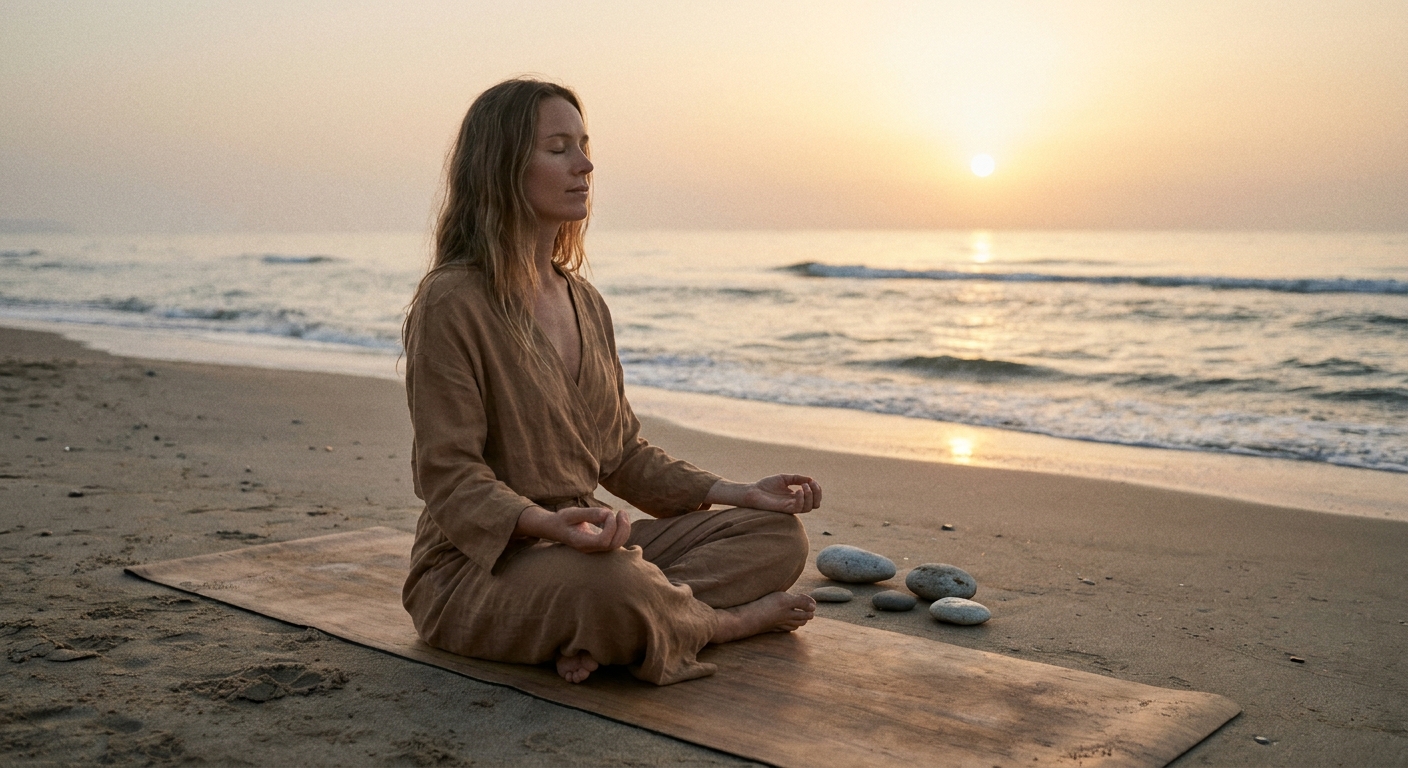
Yoga and Meditation for Mental Wellness: A Practical Beginner’s Path to Inner Peace
In a world that never stops spinning, finding genuine stillness can feel impossible. What if just 10 minutes of yoga and meditation each day could reduce anxiety, improve focus, and bring lasting clarity? Let’s explore how combining these two ancient practices can become your gateway to mental well-being.
What Is Yoga and Meditation for Mental Wellness and Why Does It Matter?
Yoga is a mind-body practice that combines physical postures, breathing techniques, and mindfulness to improve flexibility, strength, and relaxation. Meditation is a mental training practice where you focus your attention to achieve a clear, calm state of mind. Together, they form a powerful system for mental wellness that addresses stress, anxiety, and emotional balance.
When you practice yoga and meditation regularly, you create a space for your nervous system to reset. Instead of living in constant fight-or-flight mode, you learn to activate the parasympathetic response that promotes rest and recovery. This shift is not about perfection or advanced poses; it is about showing up for yourself, even for a few minutes each day.
Mental health challenges are more common than ever. According to the World Health Organization, depression and anxiety cost the global economy over $1 trillion each year in lost productivity. Chronic stress leads to burnout, insomnia, and weakened immunity. Yoga and meditation offer a low-cost, accessible way to manage these pressures.
“Yoga is a mind and body practice that can help people manage stress, improve mood, and feel better overall.”
— National Center for Complementary and Integrative Health (NCCIH), 2026
Unlike medication or therapy alone, these practices give you tools you can use anywhere. You learn to notice your thoughts without judgment and respond rather than react. That shift is transformative, and it begins with understanding how your brain changes.
How Does Yoga and Meditation Work to Rewire Your Brain?
Your brain is not fixed. Through neuroplasticity, it changes in response to experience. Every time you roll out your mat and close your eyes, you strengthen neural pathways associated with calm, focus, and emotional regulation. This is not abstract—it is measurable with modern imaging.
Research from Harvard Medical School shows that mindfulness meditation can increase gray matter in the hippocampus, which supports learning and memory, while decreasing gray matter in the amygdala, which drives fear and stress. Yoga lowers cortisol, the primary stress hormone, and increases GABA, a neurotransmitter that promotes calmness. This dual action creates a complete reset for your nervous system.
The table below summarizes the core mechanisms and their mental health effects.
| Practice | Primary Mechanism | Brain Change | Mental Health Benefit |
|---|---|---|---|
| Yoga | Physical postures + breathwork | Lowers cortisol, increases GABA | Reduced anxiety, better mood |
| Meditation | Focused attention + mindfulness | Thicker hippocampus, smaller amygdala | Improved focus, emotional regulation |
| Combined | Movement + stillness + awareness | Enhanced neuroplasticity, balanced stress response | Resilience, self-awareness, deep rest |
What Are the Main Mental Health Benefits of Yoga and Meditation?
The benefits go far beyond relaxation. When practiced consistently, yoga and meditation create measurable changes in how you think, feel, and respond to stress. Here are the key benefits supported by research and reported by practitioners.
- Reduced anxiety and stress – Lower cortisol levels and activate the parasympathetic nervous system for deep calm.
- Improved focus and concentration – Meditation strengthens your attention span like a muscle, making you more productive.
- Better emotional regulation – Learn to respond instead of reacting to life’s challenges with greater patience.
- Deeper, more restful sleep – Yoga Nidra and guided meditations help quiet the racing mind before bed.
- Enhanced self-awareness – Connect with your inner self and understand your thought patterns with clarity.
- Greater resilience – Build the mental strength to navigate difficult times with grace and confidence.
These benefits are not just anecdotal. A 2026 meta-analysis published in the Journal of Clinical Psychology found that mindfulness-based interventions reduce anxiety symptoms by an average of 23% compared to control groups. Consider the case of a 34-year-old teacher who started using Vitalizen for 10 minutes daily. After eight weeks, her GAD-7 anxiety score dropped from 18 to 7, and she reported a 40% improvement in sleep quality.
Ready to experience these benefits yourself? Start your free trial with Vitalizen.app today and access hundreds of guided yoga and meditation sessions designed to bring peace into your daily life.
How to Start a Simple 10-Minute Beginner Routine Today?
You do not need to be flexible or experienced to begin. All you need is a quiet space, comfortable clothing, and a willingness to show up for yourself. Here is a simple 10-minute routine you can do anywhere, anytime.
- Grounding Breath (2 minutes): Sit comfortably with your spine tall. Close your eyes and bring your hands to your belly. Inhale deeply through your nose for four counts, hold for four counts, and exhale slowly for six counts. This activates your vagus nerve and signals safety.
- Gentle Neck and Shoulder Rolls (2 minutes): While still seated, slowly roll your shoulders forward and backward. Tilt your head gently from side to side. This releases tension stored in the upper body where stress accumulates.
- Cat-Cow Stretch (2 minutes): Come to your hands and knees. Inhale as you drop your belly and lift your gaze (Cow pose). Exhale as you round your spine and tuck your chin (Cat pose). Move with your breath to release physical tension.
- Seated Forward Fold (2 minutes): Sit with your legs extended. Inhale to lengthen your spine, then exhale as you gently fold forward from your hips. Let your head hang heavy. This calms the mind and stretches the back body.
- Guided Meditation (2 minutes): Lie down or sit comfortably. Close your eyes and bring awareness to your natural breath. If your mind wanders, gently return without judgment. Use the guided meditation feature on Vitalizen to stay focused.
How Much Does It Cost, and Where and When Should You Practice?
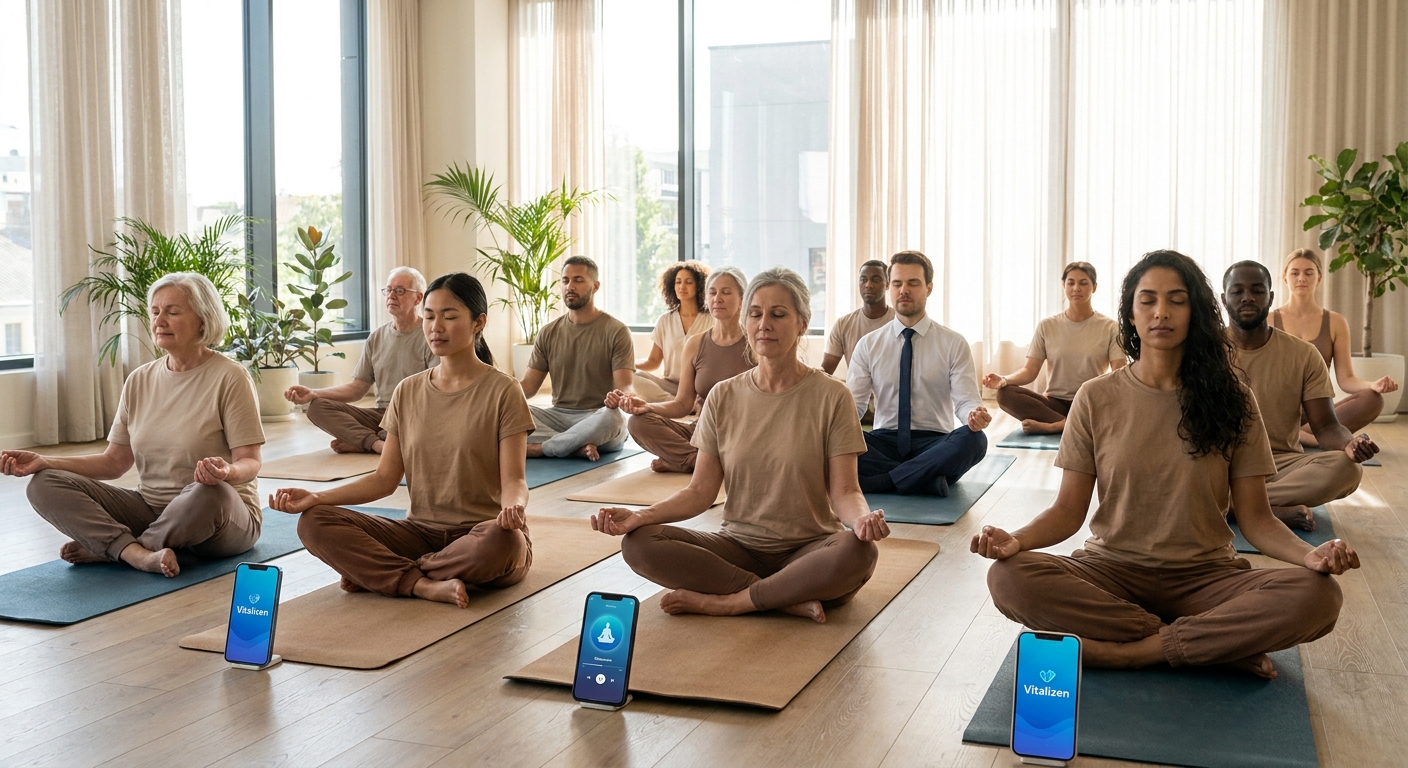
Starting a yoga and meditation practice does not require a big budget. You can begin for free with YouTube videos, community classes, or the guided sessions on Vitalizen.app. Paid apps and studio memberships typically range from $10 to $30 per month, but many offer free trials.
You can practice almost anywhere: in your living room, a quiet park, or even your office during a break. The key is to choose a space where you feel safe and can minimize distractions. The best time is the one you can stick to. Morning practice energizes you and sets a calm tone, while evening practice helps you unwind and sleep better.
| Option | Typical Cost | Best For | Commitment |
|---|---|---|---|
| Free YouTube videos | $0 | Beginners exploring | No fixed schedule |
| Vitalizen App | Free trial, then low monthly fee | Structured guided practice | Daily 5–15 minutes |
| Local yoga studio | $15–$25 per class | Community and in-person guidance | 1–2 times weekly |
Common Myths About Yoga and Meditation Debunked
Many people hesitate to start because of misconceptions. Let’s clear up a few common myths.
- Myth: You need to be flexible. Flexibility is a result, not a requirement. Yoga adapts to your body.
- Myth: Meditation means emptying your mind. It’s about noticing thoughts without judgment, not eliminating them.
- Myth: It takes too much time. Even 5 minutes daily can create meaningful change.
- Myth: It’s only for relaxation. It also improves focus, emotional strength, and physical health.
How to Stay Consistent with Your Practice
Consistency matters more than duration. Here are practical tips to build a lasting habit:
- Start small: Commit to just 5 minutes a day. Once it becomes automatic, increase gradually.
- Set a trigger: Pair your practice with an existing habit, like after brushing your teeth or before your morning coffee.
- Use an app: Guided sessions remove the guesswork. Vitalizen offers reminders and progress tracking.
- Create a dedicated space: Even a corner with a cushion signals your brain it’s time to unwind.
- Be kind to yourself: Missed a day? No problem. Just resume the next day without guilt.
What Are Common Questions About Yoga and Meditation for Mental Wellness?
You probably have questions. Here are clear, practical answers to the most common concerns beginners raise about yoga and meditation for mental health.
How long does it take to see mental health benefits from yoga and meditation?
Many people report feeling calmer and more centered after just one session. However, for lasting changes in brain chemistry and stress response, most experts recommend practicing consistently for at least 4 to 6 weeks. Even 5 to 10 minutes a day can make a significant difference over time. Research shows measurable improvements in mood and anxiety levels after about eight weeks of regular practice.
Can yoga and meditation help with anxiety and panic attacks?
Absolutely. Yoga and meditation are among the most effective complementary therapies for anxiety disorders. Breathwork techniques like diaphragmatic breathing and alternate nostril breathing can quickly calm an overactive nervous system. Combined with regular practice, they help reduce the frequency and intensity of panic attacks. A 2026 clinical review found that mindfulness-based stress reduction significantly lowers anxiety scores compared to waitlist controls.
Do I need to be flexible to start yoga?
Not at all! Flexibility is a result of yoga, not a requirement. Yoga is about connecting your breath with movement and listening to your body. There are modified versions of every pose, and many yoga styles focus on gentle, restorative movements that anyone can do regardless of age or fitness level. Props like blocks and straps make poses accessible even if you have limited range of motion.
What is the best time of day to practice yoga and meditation?
The best time is the time that works for you. Many people prefer mornings because it sets a calm tone for the day ahead. Others find evening practice helps them unwind and sleep better. The key is consistency. Choose a time you can commit to and make it a non-negotiable part of your self-care routine. Even a short midday break can reset your nervous system.
How is Vitalizen different from other yoga and meditation apps?
Vitalizen.app stands out because it combines yoga and meditation into one seamless experience. Our content is designed by certified instructors and mindfulness experts, with a focus on real-world applicability. We offer personalized recommendations, progress tracking, and a community of like-minded individuals supporting each other on their wellness journey. Start with a free trial and see how a few daily minutes can shift your mental state.
There has never been a better time to invest in your mental health. The demands of modern life are not going away, but how you respond to them can change entirely. Yoga and meditation offer you a refuge—a place where you can reconnect with yourself, breathe deeply, and remember what truly matters.
Remember, you do not need to be perfect. You do not need to meditate for an hour or master advanced yoga poses. All you need is to start. Take one breath. Roll out your mat. Open the Vitalizen app. And give yourself the gift of presence.
Your future self will thank you.
Ready to transform your mental wellness? Start your free trial with Vitalizen.app today and access hundreds of guided yoga and meditation sessions designed to bring peace into your daily life.
For more articles, tips, and guidance on yoga and meditation, explore our wellness blog or reach out to us. We are here to support you every step of the way.