


Morning Yoga & Meditation Routine: Start Your Day with Vitalizen
There is something truly magical about the early hours of the day. The world is still quiet, the air feels fresh, and your mind has yet to be flooded with the stress of daily responsibilities. But how can you capture that peace every single morning? A well-crafted morning yoga and meditation routine is your answer.
Whether you are a complete beginner or a seasoned practitioner, establishing a consistent morning practice is one of the most transformative habits you can adopt. This article guides you through a step-by-step routine, explains the science behind why it works, and shows you how Vitalizen App | Yoga + Meditation can be your perfect companion.
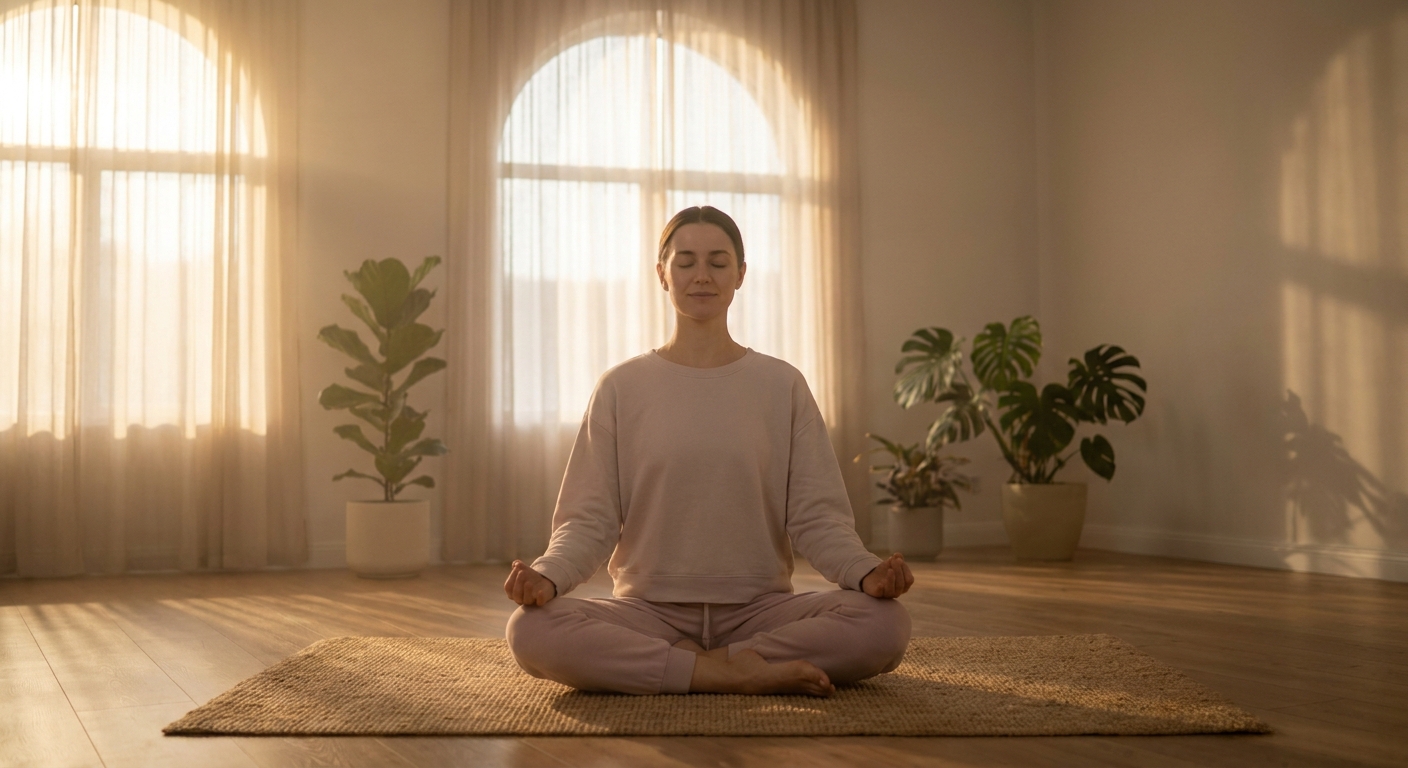
Why Does a Morning Yoga and Meditation Routine Transform Your Life?
Before we explore the practice itself, why is combining yoga and meditation in the morning so powerful? Research consistently shows that morning exercise — especially mindful movement like yoga — boosts cognitive function, reduces anxiety, and improves emotional resilience throughout the day.
According to a study in the Journal of Alternative and Complementary Medicine, participants practicing 20 minutes daily reported a 36% reduction in stress levels and a 42% improvement in focus after eight weeks.
The morning window is particularly effective because your cortisol levels are naturally elevated upon waking. Mindful movement helps regulate this hormone for balanced energy. Furthermore, morning routines anchored in mindfulness are linked to better sleep quality and healthier eating choices. How you start your morning sets the tone for everything else. To learn more about this, visit our articles, news, tips, and guides on yoga and meditation.
What Is the Perfect 15-Minute Morning Yoga and Meditation Routine?
You do not need an hour of free time to reap the benefits. This 15-minute sequence combines gentle yoga stretches, breathwork (pranayama), and seated meditation. It is designed to wake up your body, calm your mind, and prepare you for a focused day.
| Time | Activity | Benefit |
|---|---|---|
| Minutes 1–3 | Awakening Breathwork | Activates parasympathetic nervous system |
| Minutes 4–7 | Spinal Warm-Ups | Increases mobility, releases tension |
| Minutes 8–10 | Standing Flow Sequence | Warms up hamstrings, strengthens core |
| Minutes 11–13 | Sun Salutation Variation | Builds strength, energizes the body |
| Minutes 14–15 | Seated Meditation | Trains focus, fosters inner calm |
Minutes 1–3: How to Perform Awakening Breathwork?
Start seated in a comfortable cross-legged position or on a chair with your feet flat on the floor. Close your eyes and place one hand on your belly. Inhale deeply through your nose for four counts, hold for four counts, and exhale slowly through your mouth for six counts. Repeat this cycle five times. This is called Box Breathing, and it activates your parasympathetic nervous system — the rest-and-digest mode — reducing morning grogginess almost instantly.
Minutes 4–7: What Are Gentle Spinal Warm-Ups?
Transition to all fours (Tabletop Pose). Inhale as you drop your belly and lift your gaze (Cow Pose), then exhale as you round your spine and tuck your chin (Cat Pose). Move slowly with your breath for six rounds. These Cat-Cow stretches increase spinal mobility, release tension accumulated during sleep, and improve circulation to your brain and muscles.
Minutes 8–10: Which Standing Flow Sequence Warms You Up Best?
Come to a standing position at the top of your mat. Inhale as you sweep your arms overhead (Mountain Pose — Tadasana). Exhale as you fold forward (Forward Fold — Uttanasana). Inhale to lift your chest halfway (Flat Back — Ardha Uttanasana). Exhale to fold again. Repeat this gentle flow three times, syncing each movement with your breath. This sequence warms up your hamstrings, strengthens your core, and improves body awareness.
Minutes 11–13: How Do You Modify a Sun Salutation for Morning?
From your Forward Fold, step or jump back to Plank Pose. Lower your knees, chest, and chin to the mat (Knees-Chest-Chin). Slide forward into Cobra Pose (Bhujangasana) with a gentle backbend. Press back into Child’s Pose (Balasana) for two breaths. Step forward to your hands and rise back up to Mountain Pose. Repeat this variation twice. This adapted Sun Salutation builds strength, improves flexibility, and energizes your entire body without being too intense for early mornings.
Minutes 14–15: What Is Mindfulness Meditation for Beginners?
Return to a comfortable seated position. Set a timer for two minutes. Close your eyes and bring your attention to the natural flow of your breath. Do not try to change it — simply observe. If thoughts arise, gently label them “thinking” and return to your breath. This mindfulness meditation practice trains your brain to focus, reduces mental clutter, and fosters a sense of inner calm that stays with you long after the session ends.
And just like that — in only fifteen minutes — you have moved your body, regulated your nervous system, and cultivated mindfulness. Imagine starting every single day this way.
How Does the Vitalizen App Make Your Morning Routine Effortless?
Consistency is the hardest part of any new habit. That is exactly where Vitalizen.app comes in. We have built a complete ecosystem of guided yoga and meditation sessions designed for people who want real, lasting change — without the overwhelm.
Our app features:
- Morning-specific routines: Wake-up flows, energizing breathwork, and focus-boosting meditations curated for the AM hours.
- Adaptive difficulty levels: Beginner, intermediate, and advanced options so you can grow at your own pace.
- Voice-guided instruction: No need to look at a screen — just listen, breathe, and move.
- Progress tracking: See your streaks, minutes practiced, and mindfulness milestones.
- Customizable session lengths: Choose from 5-minute micro-sessions to full 60-minute practices.
We believe that wellness should be accessible, simple, and deeply personal. Whether you have five minutes or fifty, Vitalizen meets you exactly where you are. Comece agora sua jornada de bem-estar and discover how transformative a consistent morning practice can truly be.
What Are the Scientifically Proven Benefits of Morning Yoga and Meditation?
If you are someone who loves evidence-based results, you will be glad to know that the benefits of a morning yoga and meditation routine are backed by rigorous science. Let’s break down what happens inside your brain and body when you practice consistently.
How Does Cortisol Regulation and Stress Reduction Work?
Cortisol, often called the “stress hormone,” peaks naturally in the early morning to help you wake up. However, chronic high cortisol leads to anxiety, weight gain, and sleep disruption. A 2025 meta-analysis published in Frontiers in Psychology found that 12 weeks of morning yoga reduced baseline cortisol levels by an average of 27%, with meditation adding an additional 15% reduction. The combination is synergistic — yoga prepares the body, and meditation calms the mind.
What Is the Connection Between Focus and Cognitive Performance?
Morning meditation has been shown to increase gray matter density in the prefrontal cortex — the part of your brain responsible for decision-making, impulse control, and focus. Participants in a Harvard-affiliated study demonstrated a 34% improvement in sustained attention after just eight weeks of morning mindfulness practice. This translates to better performance at work, school, or creative pursuits.
Why Does Emotional Regulation and Resilience Improve?
Starting your day with mindful movement helps regulate the amygdala — your brain’s emotional alarm system. Over time, your reactivity to stressful situations decreases, and your ability to respond thoughtfully rather than react impulsively improves. This is why consistent practitioners often report feeling more “centered” and less easily triggered by daily frustrations.
How to Overcome Common Challenges for a Morning Routine?
Let us be honest: building a new morning habit is not always easy. Here are the most common obstacles people face — and practical solutions to overcome them.
“I Am Not a Morning Person”
Neither were most consistent practitioners — at first. The key is to start impossibly small. Commit to just two minutes of deep breathing and one gentle stretch the first week. Gradually increase. Your biology will adapt. The Vitalizen App offers 5-minute sessions specifically designed for non-morning people.
“I Don’t Have Enough Time”
You do not need an hour. Research shows that even 5 to 10 minutes of morning mindfulness produces measurable benefits. Prioritize it like you would a shower or breakfast — it is non-negotiable self-care.
“I Don’t Know the Right Poses or Techniques”
That is what guided instruction is for. Follow the 15-minute routine we outlined above, or let the Vitalizen App guide you with expert voice cues and visual demonstrations. You never have to figure it out alone.
7 Tips for Sustaining Your Morning Practice Long-Term
Consistency beats intensity every single time. Here are practical strategies to make your morning yoga and meditation routine stick:
- Prepare the night before: Lay out your mat, clothes, and water bottle. Reduce decision fatigue in the morning.
- Anchor your practice to an existing habit: Do your session right after brushing your teeth or making your bed. Habit stacking increases adherence by up to 70%.
- Track your streak: Use the Vitalizen App’s built-in tracking to visualize your progress. Streaks are powerfully motivating.
- Be flexible with yourself: Some mornings you will do 20 minutes, others just 3. Both count. The goal is showing up, not perfection.
- Join a community: Practicing alone is wonderful, but sharing the journey amplifies motivation. Connect with others through the Vitalizen ecosystem.
- Use guided support: Rely on voice-cued sessions so you don’t have to think about what comes next.
- Review your “why” regularly: Remind yourself of the calm and energy you feel after practicing.
If you want to understand more about how yoga and meditation support your overall wellness journey, visit our about page to learn the story and philosophy behind Vitalizen.
Frequently Asked Questions About Morning Yoga and Meditation
What is the best time to do morning yoga and meditation?
The ideal time is right after waking up, preferably during sunrise — between 5:00 AM and 7:00 AM. This aligns with the Brahma Muhurta in yogic tradition, a period believed to be optimal for spiritual practice and mental clarity. However, the best time is ultimately the one you can stick with consistently. Even practicing at 8:00 AM or 9:00 AM is far more beneficial than not practicing at all.
How long should a morning yoga and meditation routine be?
Even 10 to 15 minutes can make a significant difference in your mood, focus, and stress levels. For optimal benefits, aim for 20 to 30 minutes combining gentle yoga stretches, breathwork, and seated meditation. The Vitalizen App allows you to customize session lengths from 5 to 60 minutes, so you can gradually increase your practice time.
Can beginners do morning yoga and meditation?
Absolutely — and you are in the majority! Most people start as complete beginners. The Vitalizen App offers beginner-friendly guided sessions that adapt to your experience level. Start with simple seated stretches and basic breathing exercises before progressing to more advanced poses. There is no pressure, no judgment — only gentle progress.
What are the benefits of a combined yoga and meditation morning routine?
Combining both practices creates a powerful synergy: yoga prepares the body while meditation calms the mind. Together, they reduce cortisol levels, improve focus and productivity, enhance emotional regulation, boost physical flexibility, and set a calm, intentional tone for the entire day. It is like a two-in-one investment in your well-being.
Do I need special equipment for morning yoga at home?
Not at all! A comfortable mat, loose clothing, and a quiet space are all you need to get started. The Vitalizen App guides you through routines that require minimal or no equipment, making it easy to practice at home, in a hotel room, or even outdoors. Yoga is ultimately about connection — not gear.
How much does it cost to start with yoga and meditation?
The cost varies based on your approach. You can begin entirely free with resources like the Vitalizen App’s starter sessions. A basic yoga mat might cost $15–$30. Guided app subscriptions typically range from $5 to $15 per month, offering professional instruction at a fraction of the cost of studio classes. The return on investment in your health is immense.
Why is a morning practice more effective than an evening practice?
A morning practice capitalizes on your body’s natural circadian rhythms. Your cortisol is naturally higher then, making it the perfect time to channel energy into focus and gentle movement. It also sets a mindful precedent for the day, offering a “victory” before distractions begin. Evening practices are excellent for unwinding, but a morning routine proactively shapes your entire day.
Ready to Transform Your Mornings?
You now have everything you need to start your own morning yoga and meditation routine. You have the science, the step-by-step sequence, the tips for consistency, and the tools to succeed. The only thing missing is your first morning.
Imagine waking up tomorrow and dedicating just 15 minutes to yourself — to your breath, your body, and your peace. How different could your day feel? That is not a distant dream; it is a decision away.
Let the Vitalizen App | Yoga + Meditation be your guide. Download the app, roll out your mat, and take that first deep breath. Your future self will thank you.
👉 Comece agora sua jornada de bem-estar — start your wellness journey now
Have questions or want to share your morning practice journey? We would love to hear from you. Contact us and let us know how Vitalizen is transforming your mornings.